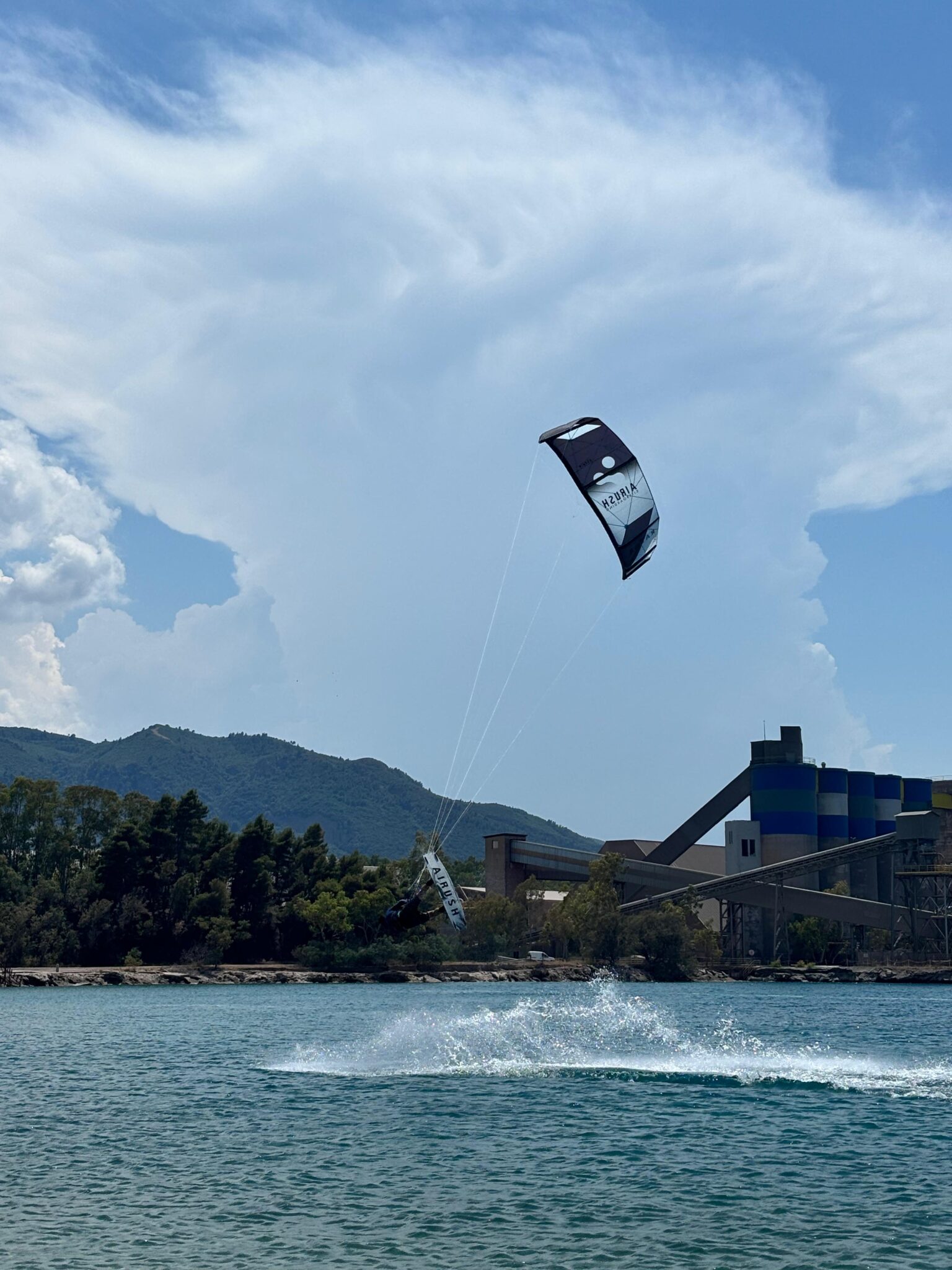
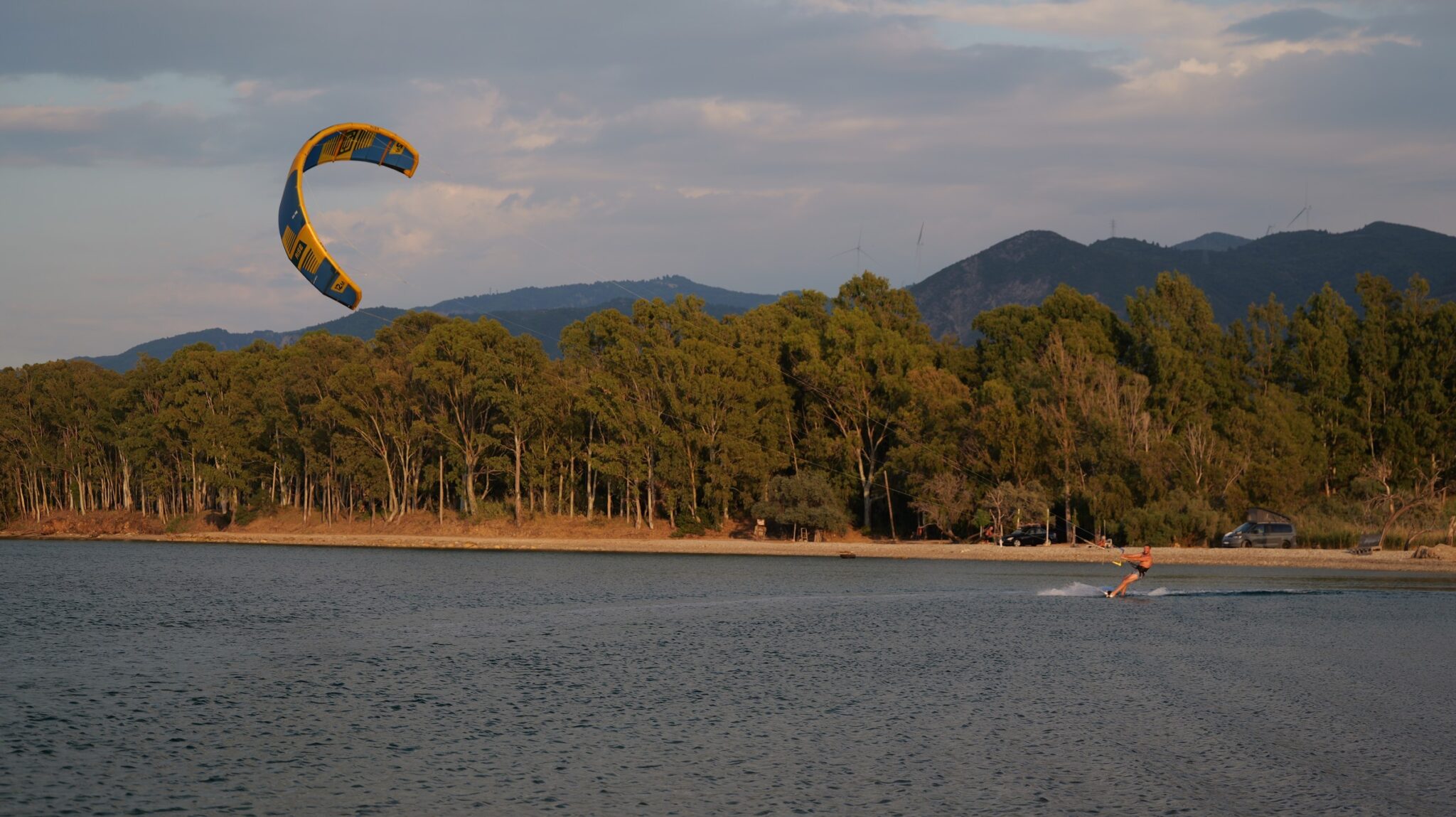
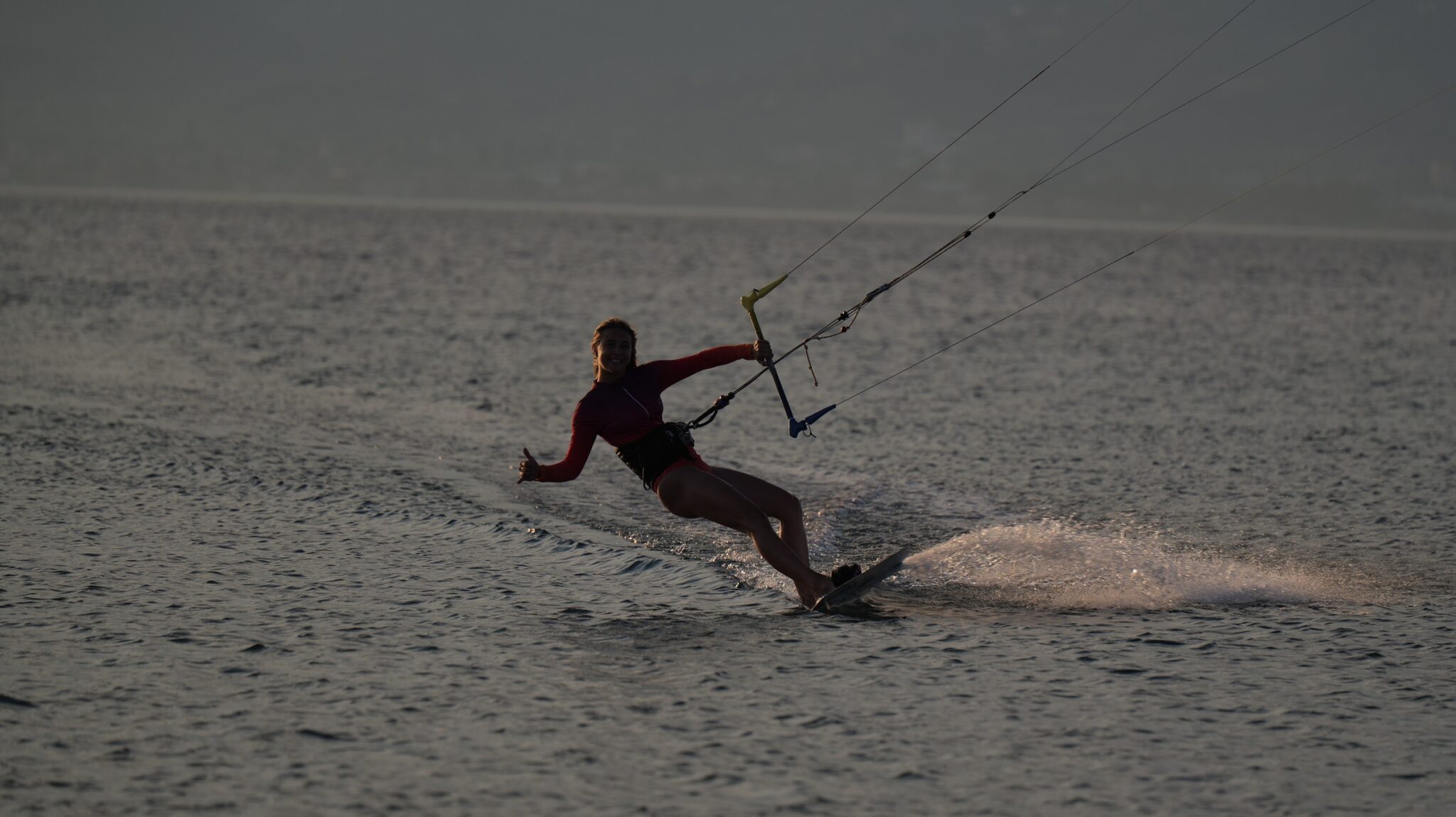
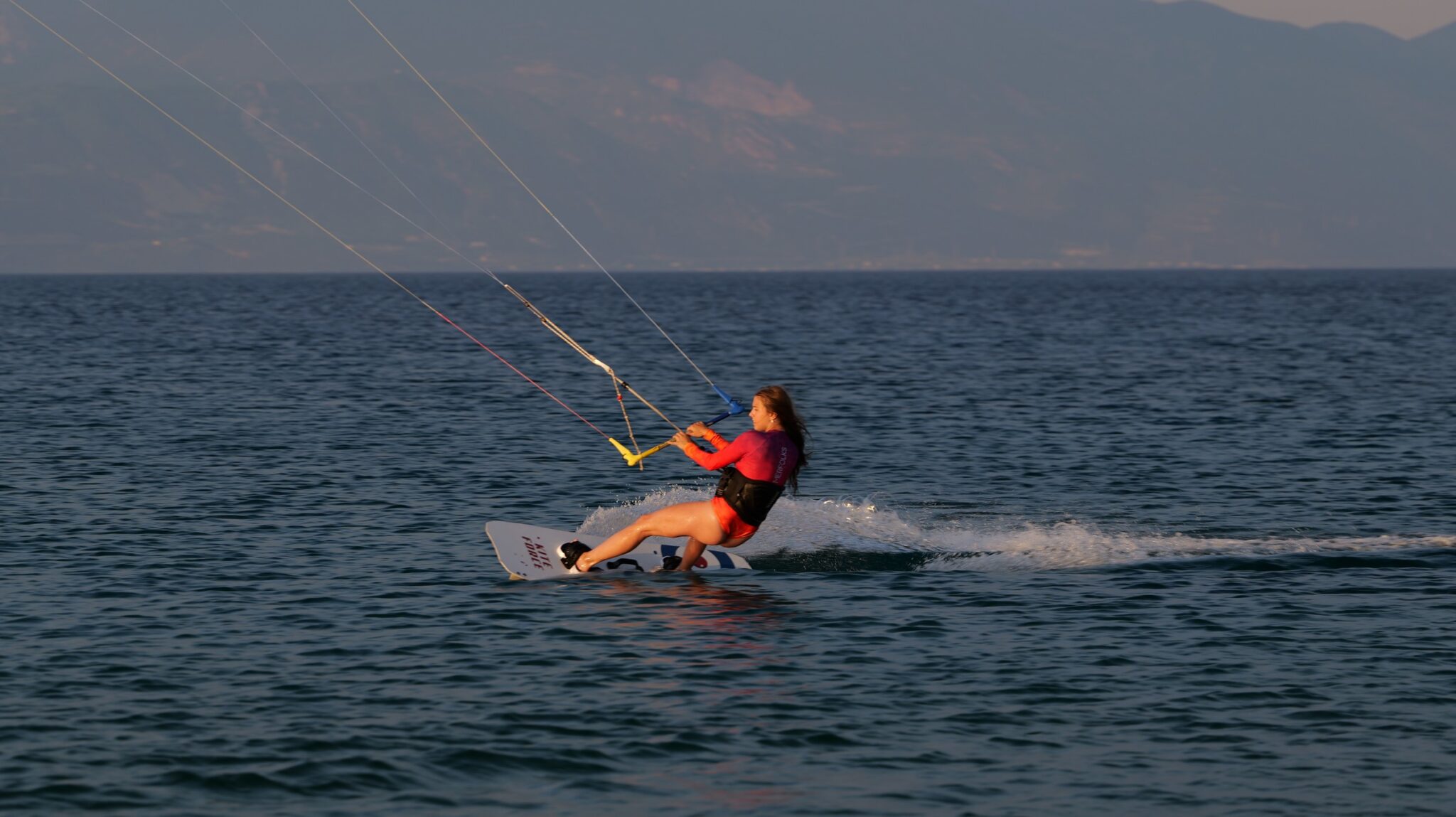
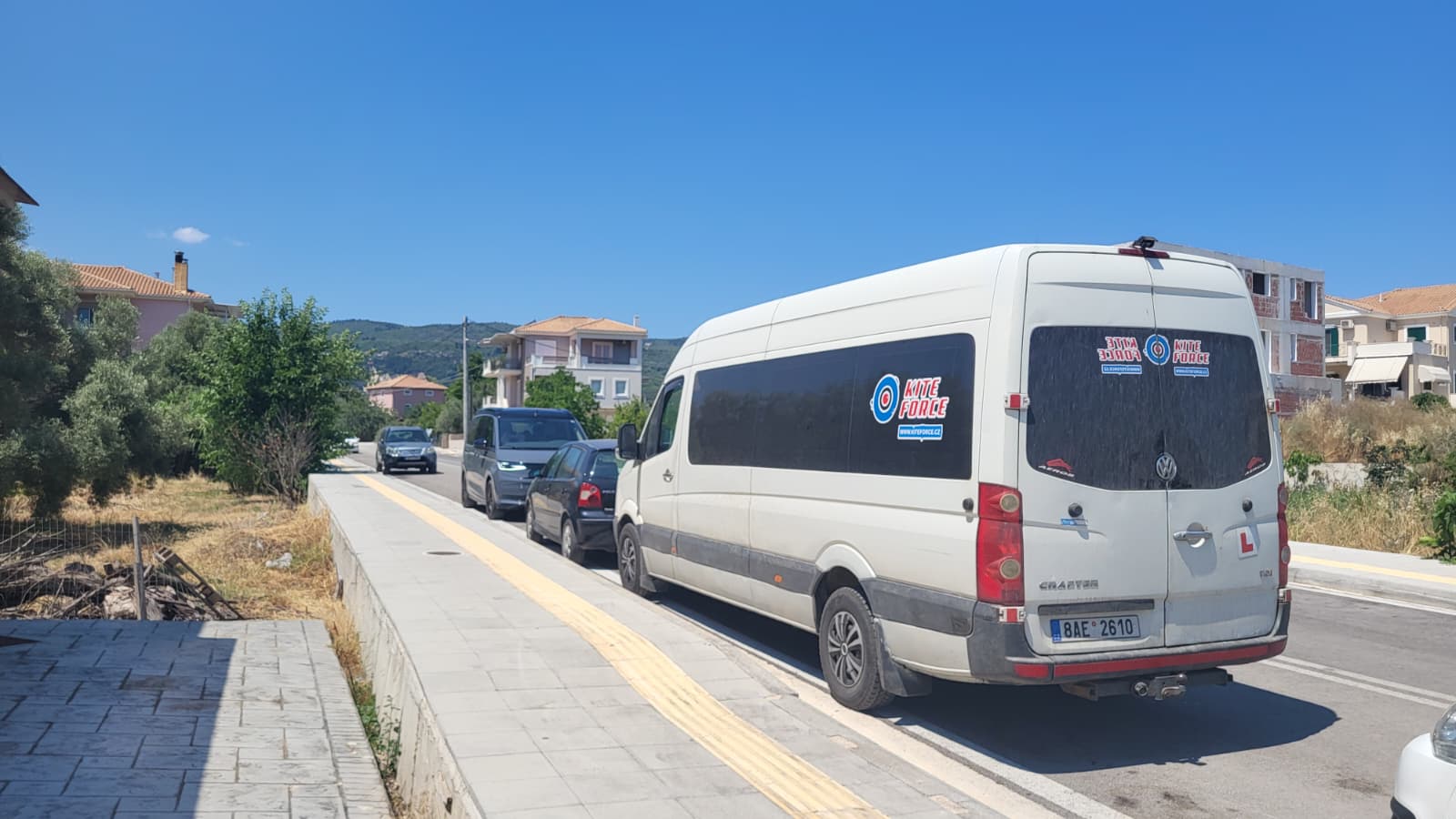
At the end of June, we loaded our kites, foil, paraglider and everything else into our VW Crafter and set off in search of new spots. Our main destination was Greece, particularly a few places around Patras and on the west coast that I’d had my eye on for a while. But since we ultimately needed to get to our kite base in Sicily, it turned into a road trip of several thousand kilometres through Serbia, North Macedonia, Greece, Albania and Italy. Along with discovering new kite spots, we visited several paragliding launch sites, I flew my longest cross-country flight yet, we were repeatedly checked for drugs, missed a ferry and found one Greek spot I liked so much I’d go back in a heartbeat.
Why keep looking for new spots?
We have an established base in Lo Stagnone, Sicily. We teach there, run camps, know the local conditions and know the kiting is good. So you might ask: why keep going elsewhere?
For me, it’s simple. I’ve always felt the need to discover new places, try new things and experience them for myself. And because I work with people and spend so much of my time around kiting, I enjoy sharing those experiences with others.
I want to know what a spot is really like. What the water is like, where you launch, how the wind behaves, what the surroundings are like, whether I’d take a beginner there and, above all, whether the place has atmosphere.
Greece had been on my mind for years. A Greek Formula Kite racer who competes alongside Domča Braunová recommended several spots around Patras. And when we suddenly had a window of free time in the second half of June, our minds were made up. We needed to get to Sicily for work anyway. Clients were arriving in July and our Junior Camp was coming up.
So we just took a little detour. OK. Quite a big detour.
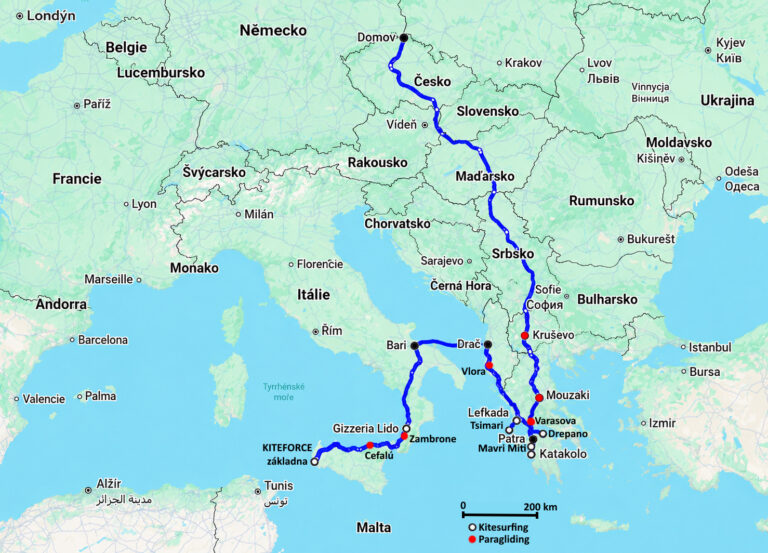
Czechia → Serbia → North Macedonia → Greece → Albania → Italy → Sicily.
Since I’m also really into paragliding, I naturally threw my glider into the van too, and it turned into exactly the kind of trip we love and that helps us “recharge”.
A big Crafter to live in throughout the trip. Kites. A paraglider. Minimal fixed plans and plenty of improvisation.
Borders like the old days
When you drive through Serbia and North Macedonia, you suddenly find yourself back at traditional border crossings. That alone is quite an experience these days. It reminded me of similar trips with my parents. Queues, passports, customs officers, barriers and a little uncertainty about what would happen next.
Things started happening to us fairly quickly.
At the Serbian–North Macedonian border, I took a photo to send to Pavel Flos, who was due to travel the same way a week after us. Just a picture of the border, which the local officers clearly didn’t appreciate.
They pulled our Crafter aside and began an inspection that lasted more than 45 minutes. Several people searched the entire van, rummaging through our belongings and checking every compartment. They were clearly convinced they had to find marijuana, hashish or something similar.
They also took me aside for a body search, stripping me naked in a closed room without cameras or recording equipment, and talked about dogs and serious trouble. But we weren’t carrying anything. So after 45 minutes of searching, they found nothing, and I almost felt they were disappointed. We threw everything back into the Crafter and carried on.
At least it made a great story and an interesting experience. We didn’t yet know that suspicions of drug smuggling would become a recurring theme throughout the road trip.
North Macedonia – affordable, mountainous and great for flying
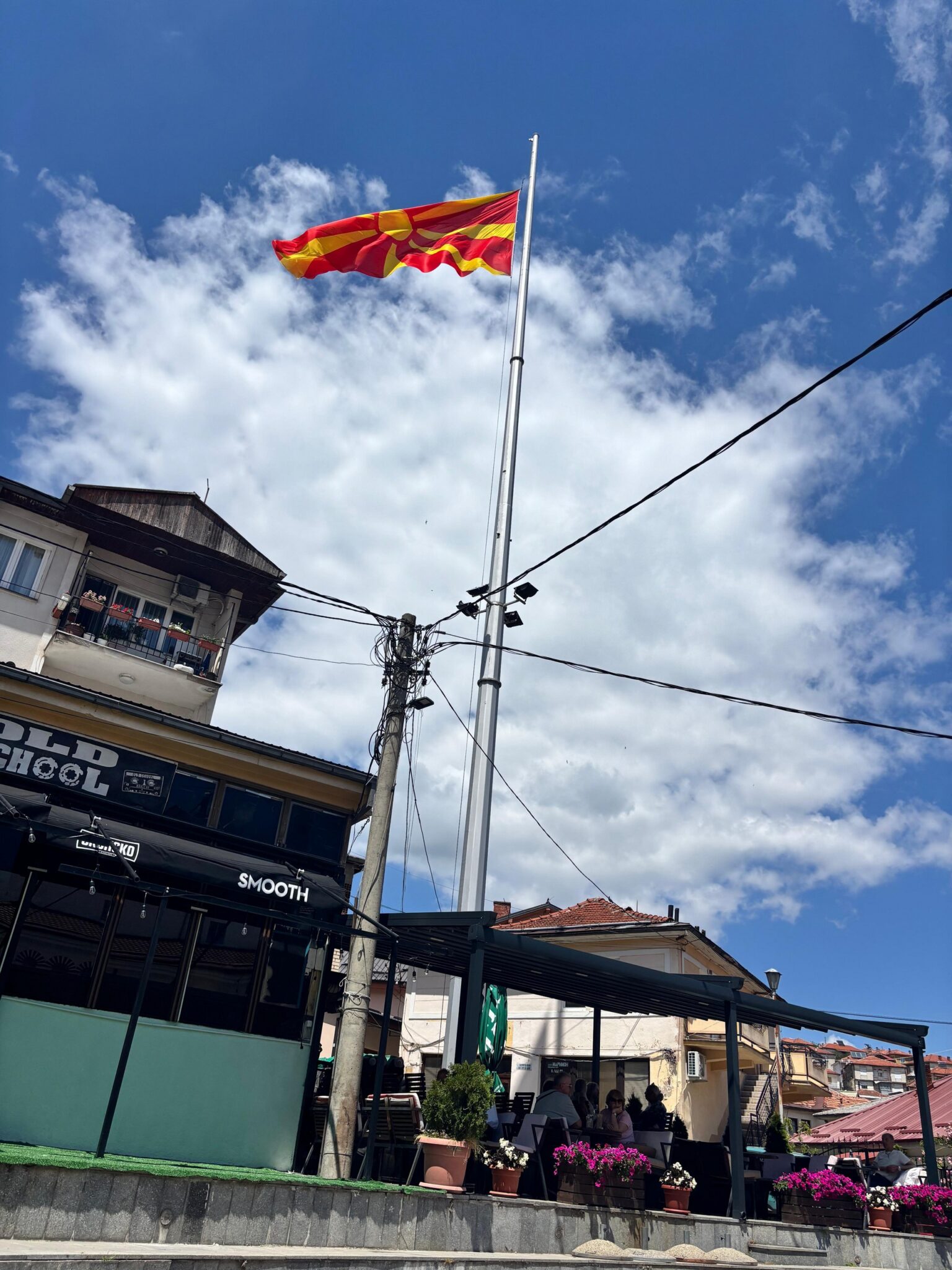
North Macedonia really surprised us. It’s a beautiful mountainous country, with much of the landscape high above sea level, and it’s still considerably cheaper than most of Europe. Restaurants and other services cost around 40% less than we’re used to in the EU.
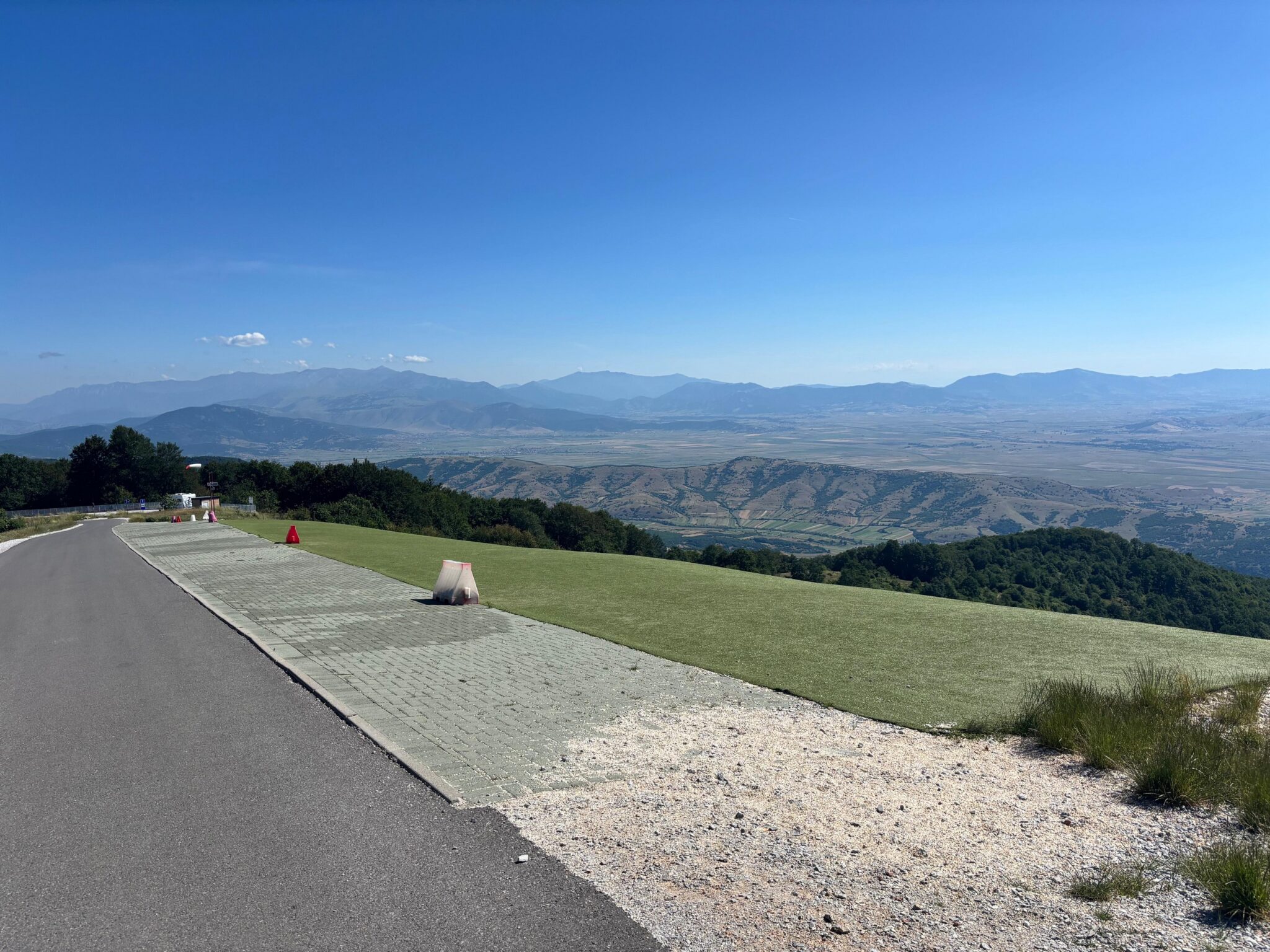
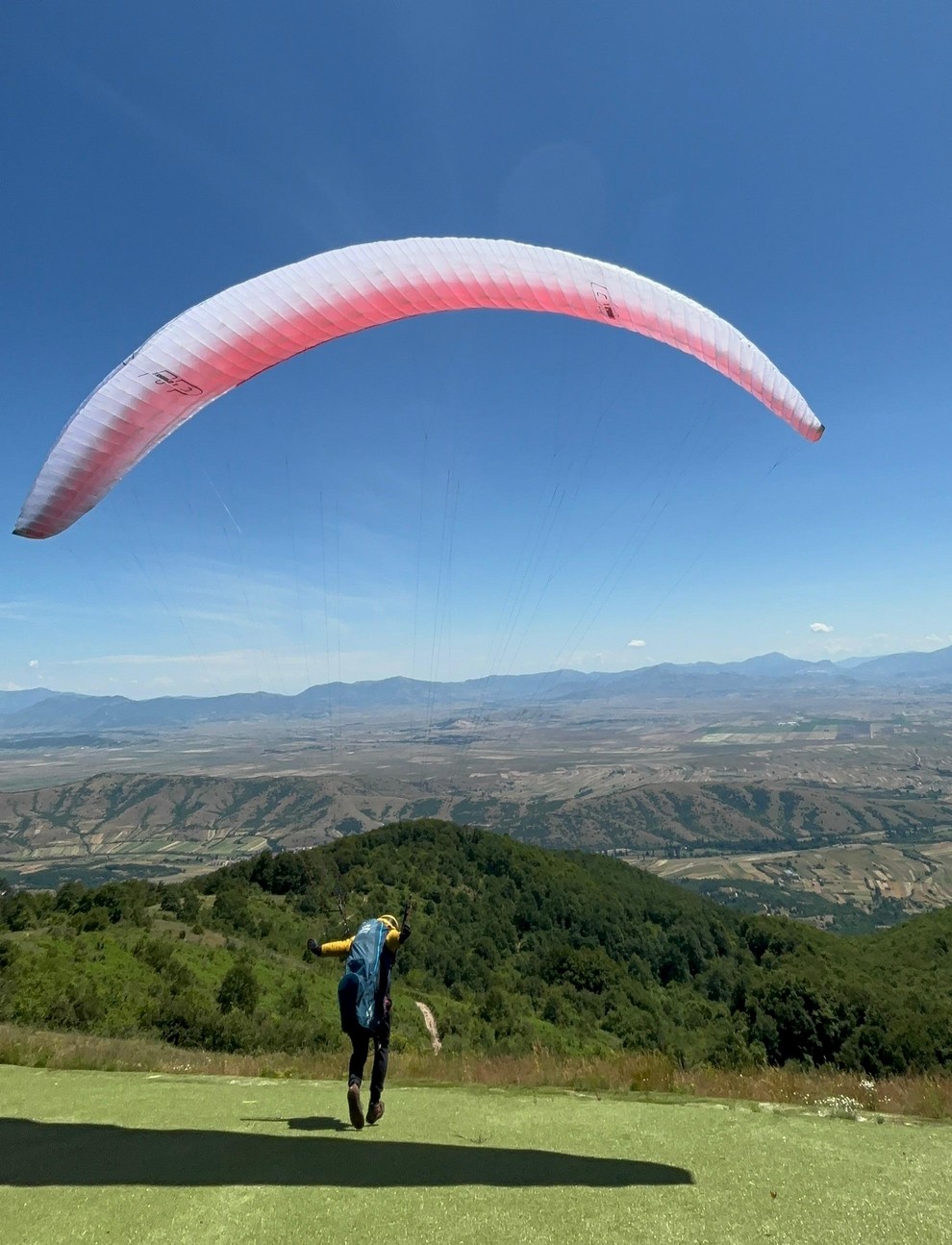
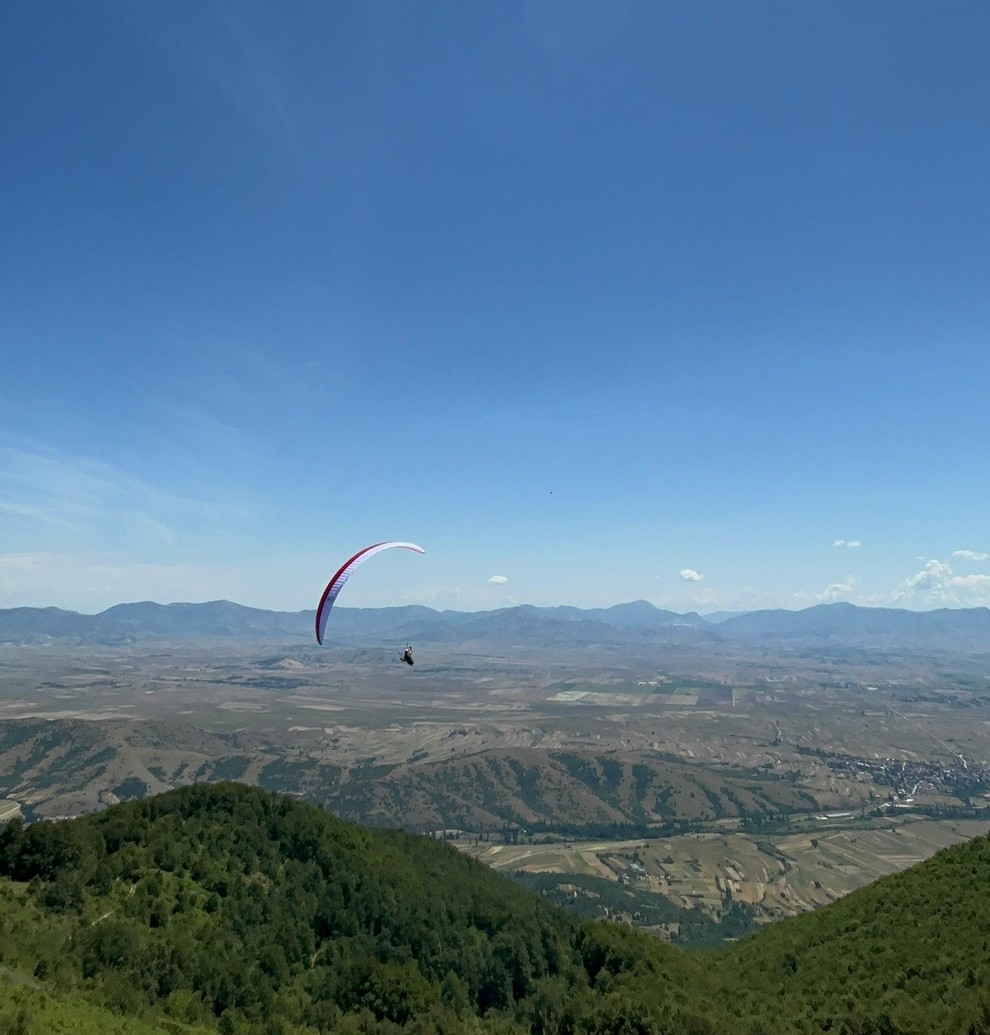
And for paragliding, it’s a little paradise. I couldn’t pass up Kruševo, which turned out to be a very good decision. We stayed for two flying days.
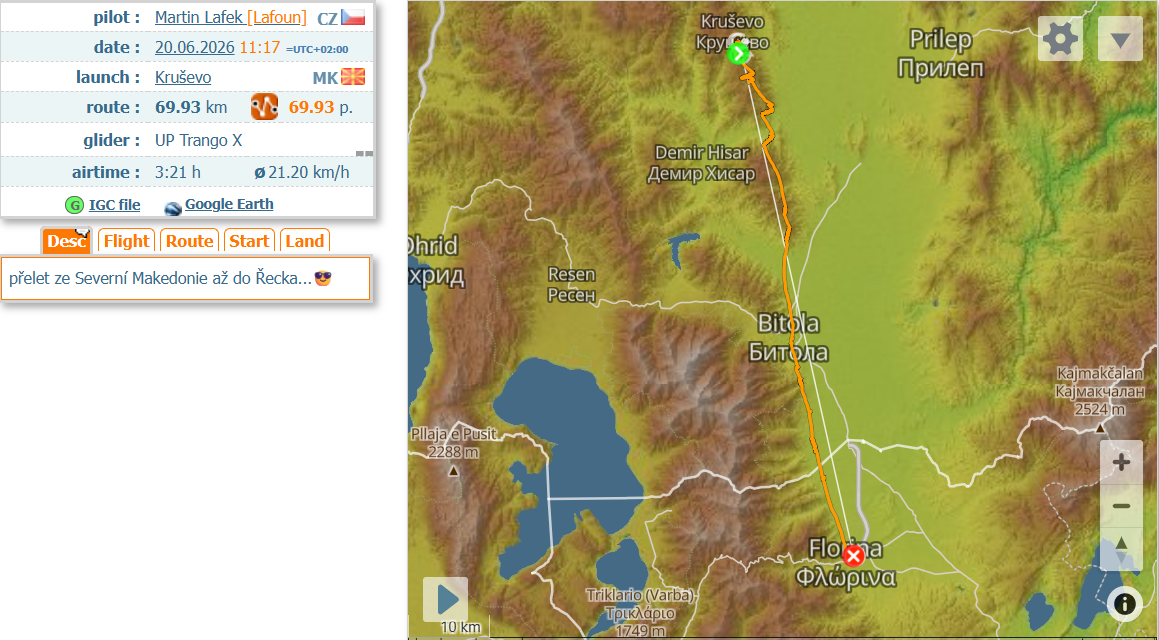
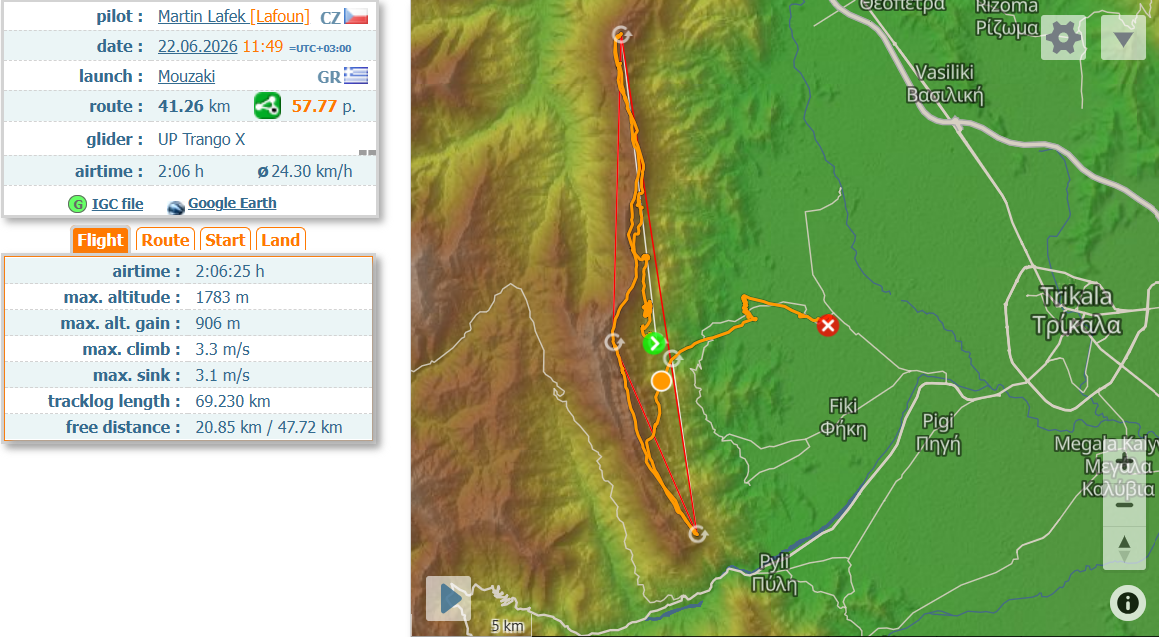
I took off, and it gradually turned into my longest cross-country flight to date. About three and a half hours in the air, beautiful conditions, thermals and the kilometres ticking by. I glanced at the map and then landed.
I took a proper look at where I was. Oh man. Greece.
I really hadn’t expected that. Through a little inattention, I’d managed to paraglide across a national border and into the European Union. Probably a little illegal, I thought. Great.
But of course our huge Crafter was still in Kruševo, along with my 20-year-old travel companion.
So she was given a seemingly simple task: get behind the wheel of this enormous van full of kites, paragliders and all sorts of other things, cross the North Macedonian–Greek border alone and find me somewhere in Greece. I can imagine the customs officers’ faces when a young woman turned up alone in a vehicle like that.
But she made it through, picked me up and we could carry on. Thanks, Viky!
GREECE
Mouzaki – a night right at the launch site
Our next paragliding stop was Mouzaki.
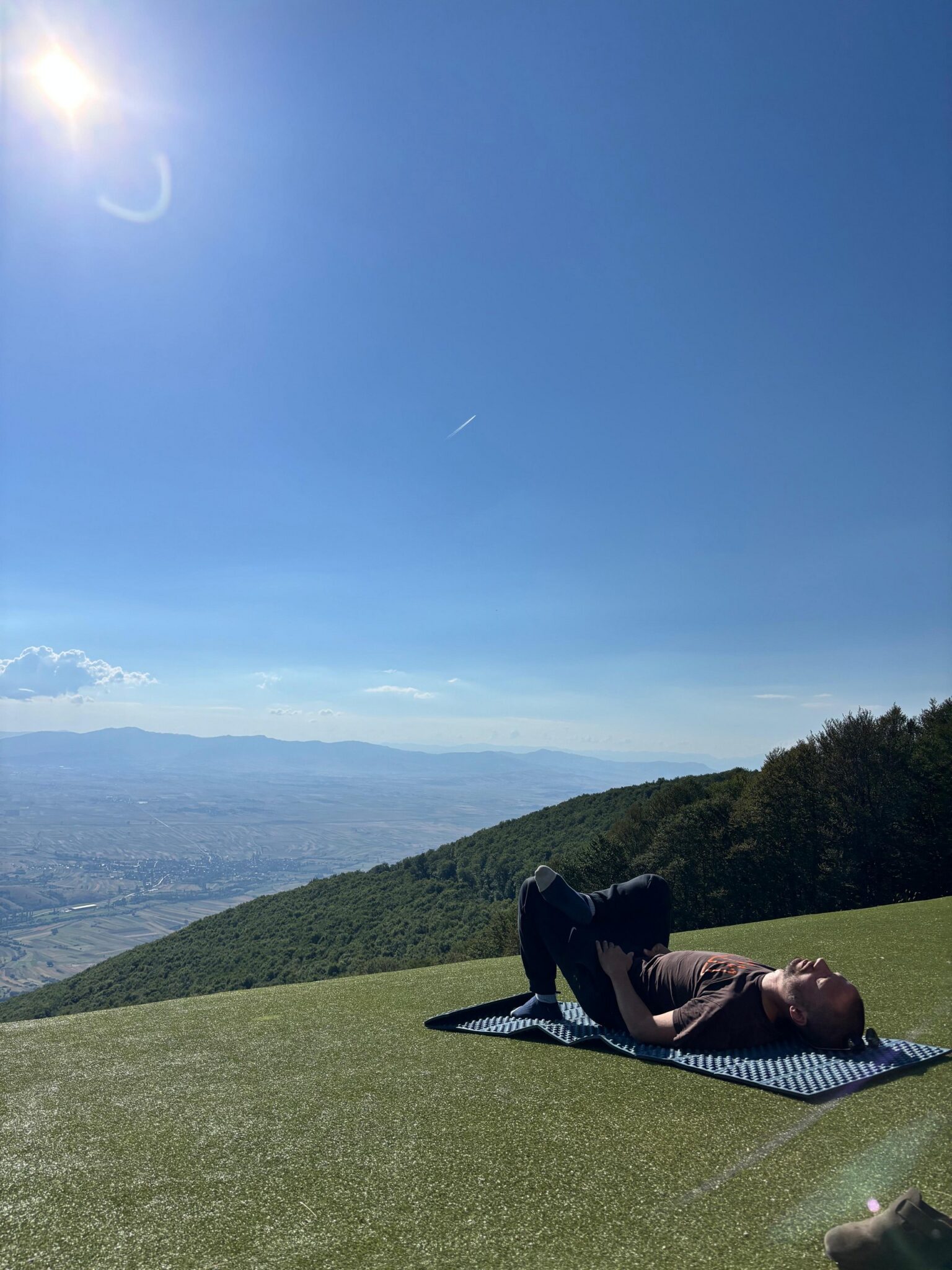
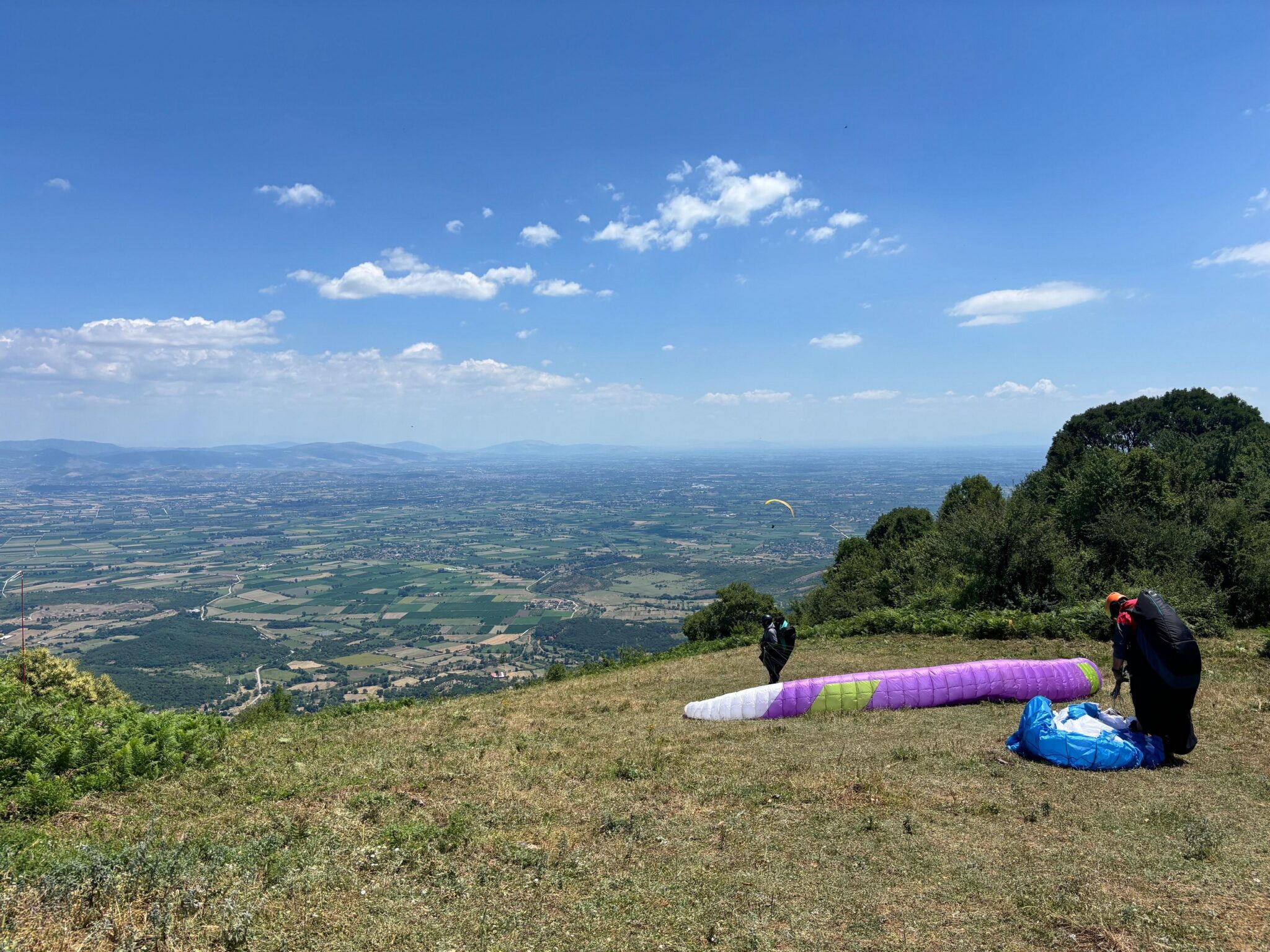
A large mountain slope that’s perfect for ridge soaring, with a clear view of the surroundings and a relaxed launch site. It’s also ideal for a road trip because you can sleep in the van right at the top. Park up in the evening. Open the Crafter in the morning and you’re at the launch site. Exactly our kind of travel.
We spent two flying days at Mouzaki too. I had a great time flying with the locals and ridge soaring for several hours. Then I managed a slightly tricky “top landing” and called it a success. The next day, after several hours in the air, I landed down in the valley.
Kryoneri and Mount Varasova – flying right above the sea
Before reaching the Peloponnese, we headed to Kryoneri, below Mount Varasova.
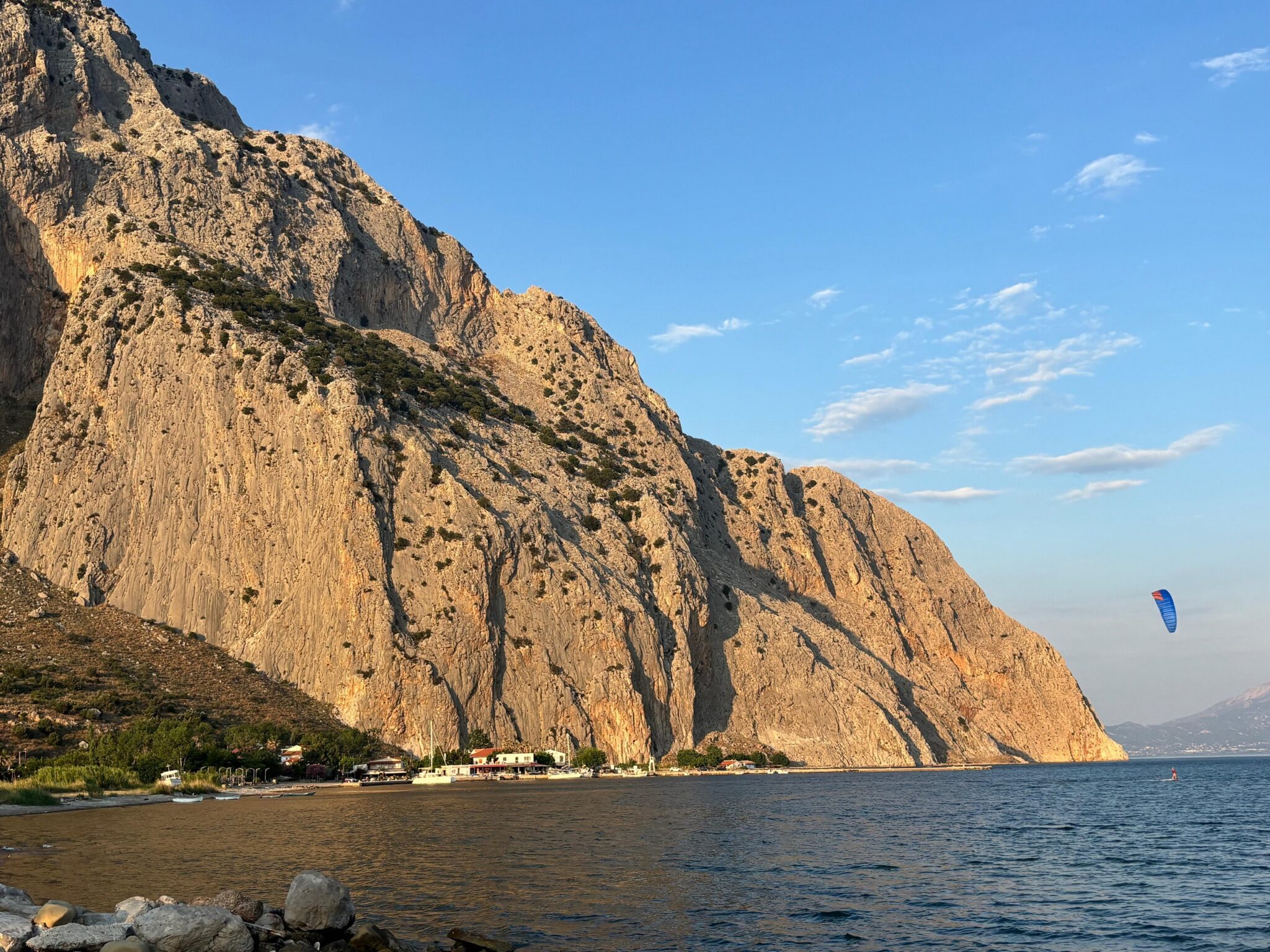
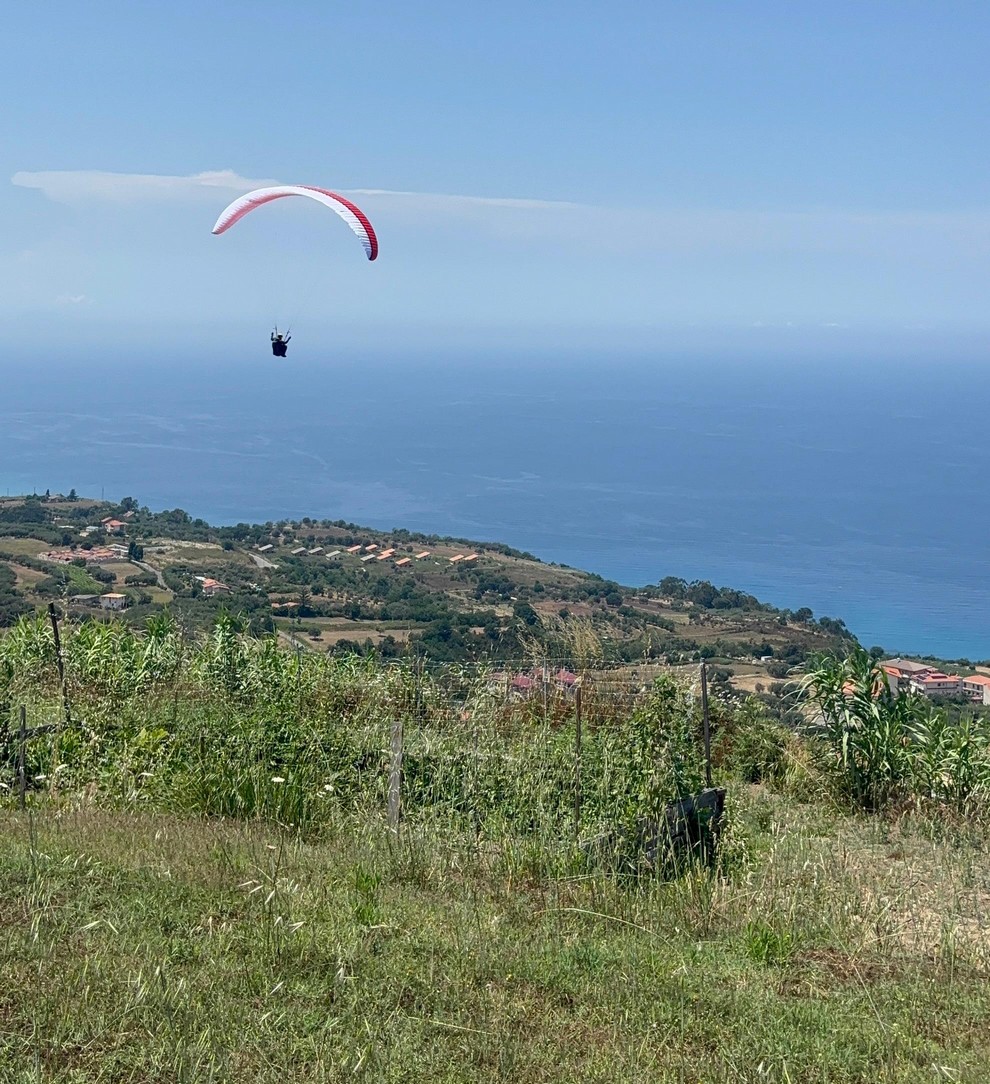
And we really loved it here. The paragliding launch site is about 400 metres above sea level, near a small chapel and an antenna. The flying is straightforward, with thermals, ridge soaring along the mountain and the sea directly below. Once you gain height, you can fly out over the water and enjoy yourself.
And landing?
Right down on the beach by the bar. What more do you need?
We also found the beach itself interesting. The spit west of the bars looked promising for kiting and potentially for teaching too. We didn’t get to test the spot in all wind directions, though, so I wouldn’t give it an unqualified recommendation for kiting.
Either way, I’d like to come back and explore the area properly someday.
Through Patras to the Peloponnese
From there we continued towards Patras and the Peloponnese. Crossing the monumental bridge near Patras cost around €25 in our tall Crafter. On the way back, we tried a small ferry instead of the bridge for about €12. It can add an hour to the journey, but if you’re not in a hurry, why not? At last, we were in the area that had inspired the Greek leg of the trip in the first place.
I have to say, my first impression of the Peloponnese was a little mixed.
Patras itself is a nice city. The landscape is interesting. But some stretches of coast around the recommended kite spots struck me as rather bleak and, in places, quite industrial. And that’s coming from someone who spends much of the year in Sicily, so I’m not exactly spoiled by pristine resorts. I suppose I was expecting a little more postcard-perfect Greece.
On the other hand, you can’t judge a kite spot solely by what’s around the beach.
Our first stop was the famous Drepano.
Drepano – a Greek freestyle classic
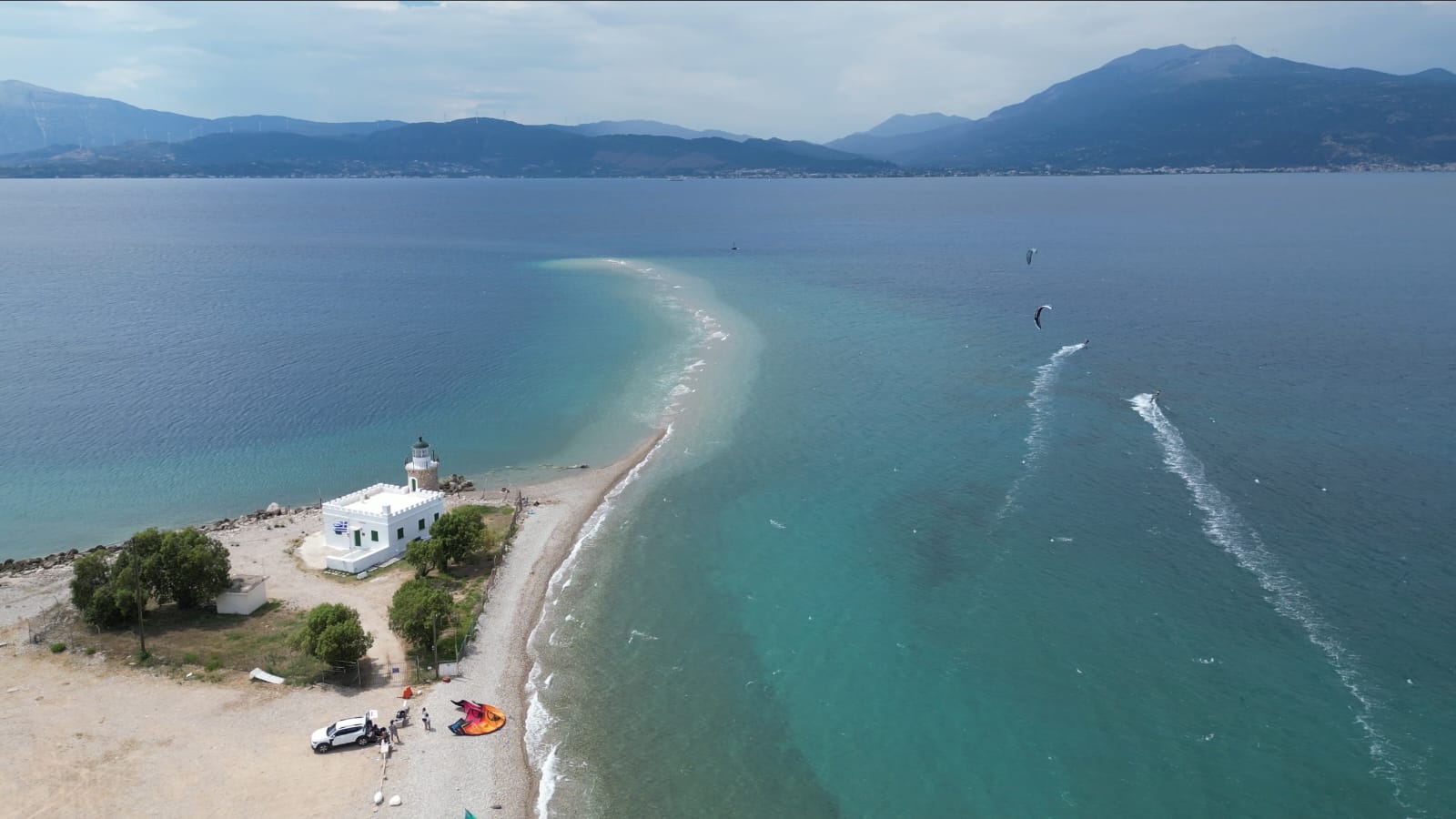
Drepano is a household name in Greek kitesurfing.
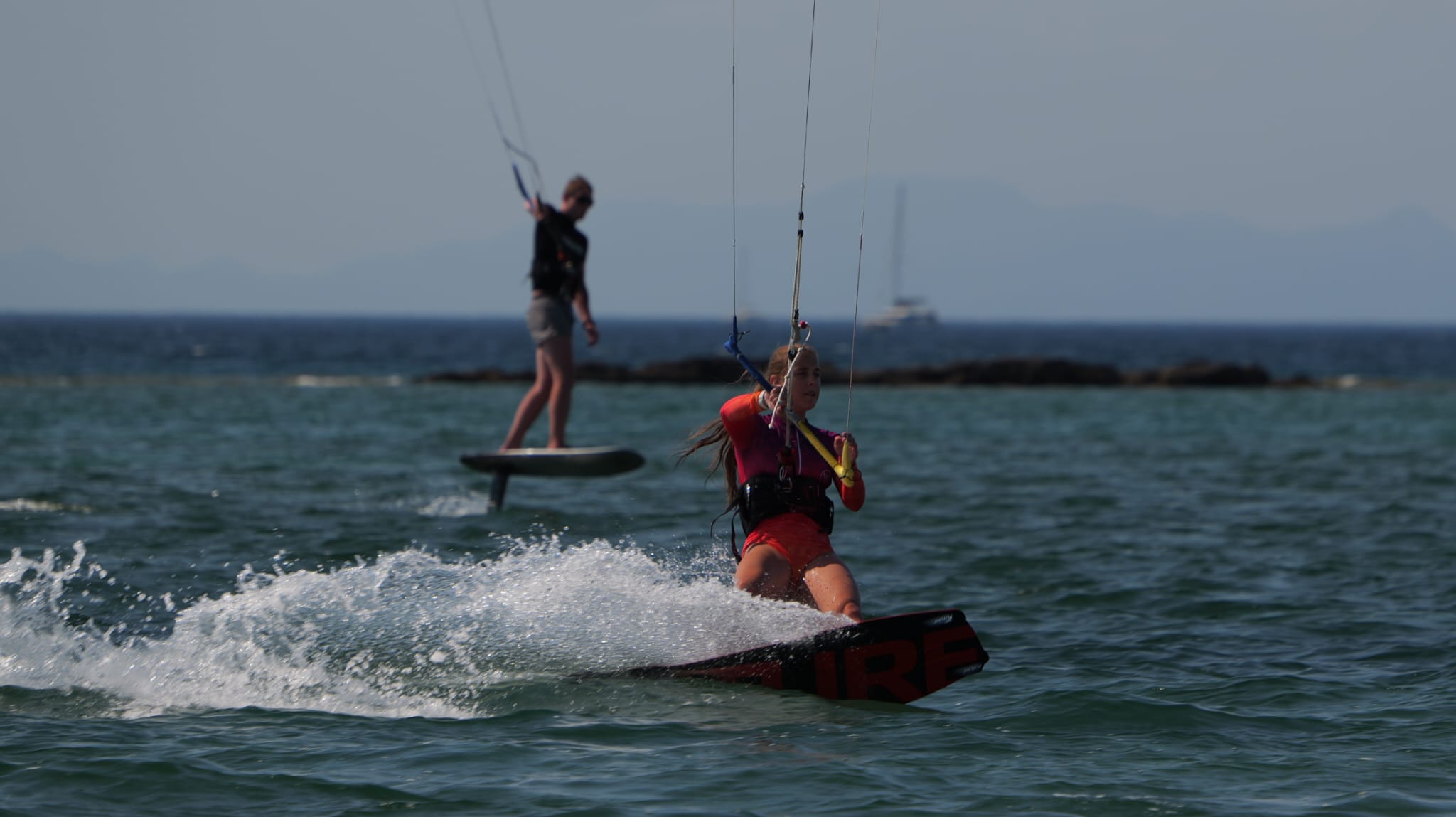
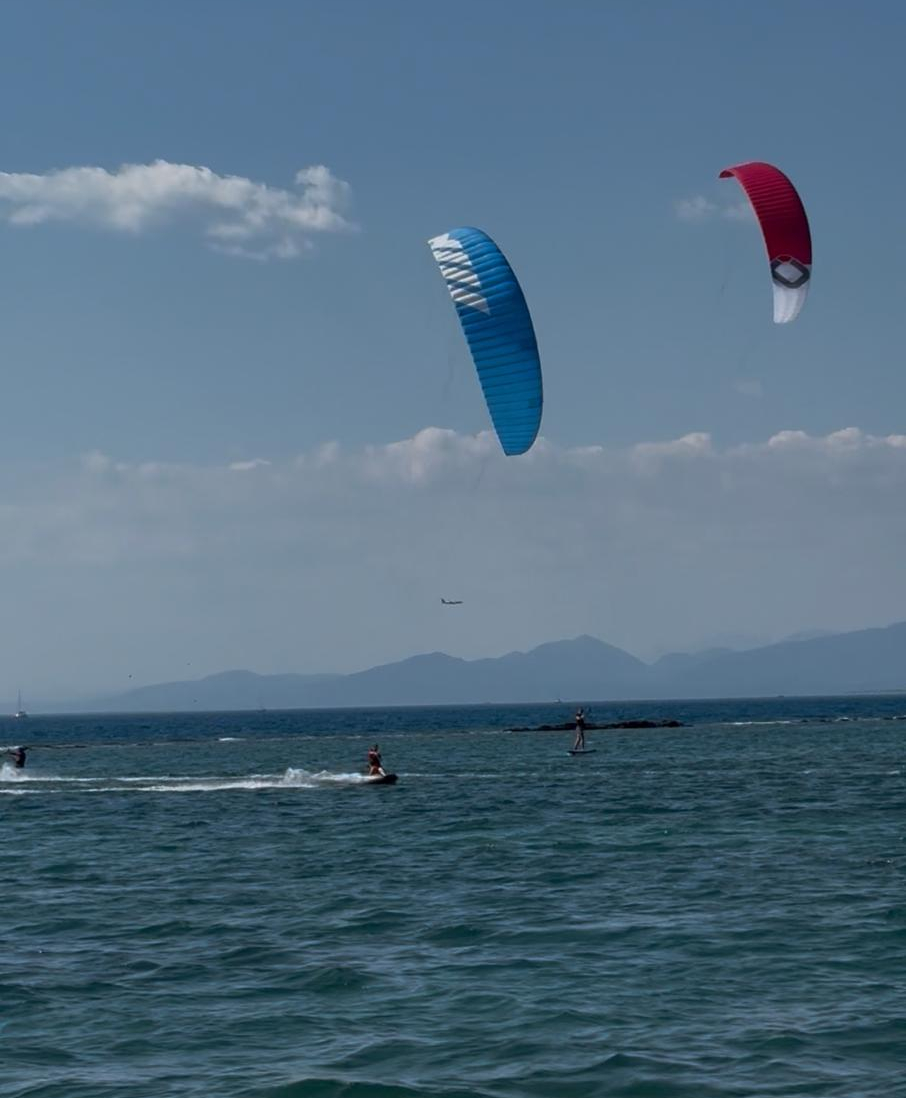
A narrow pebble spit creates some very interesting conditions. On one side, the water can be beautifully flat, making it a great place to practise freestyle.
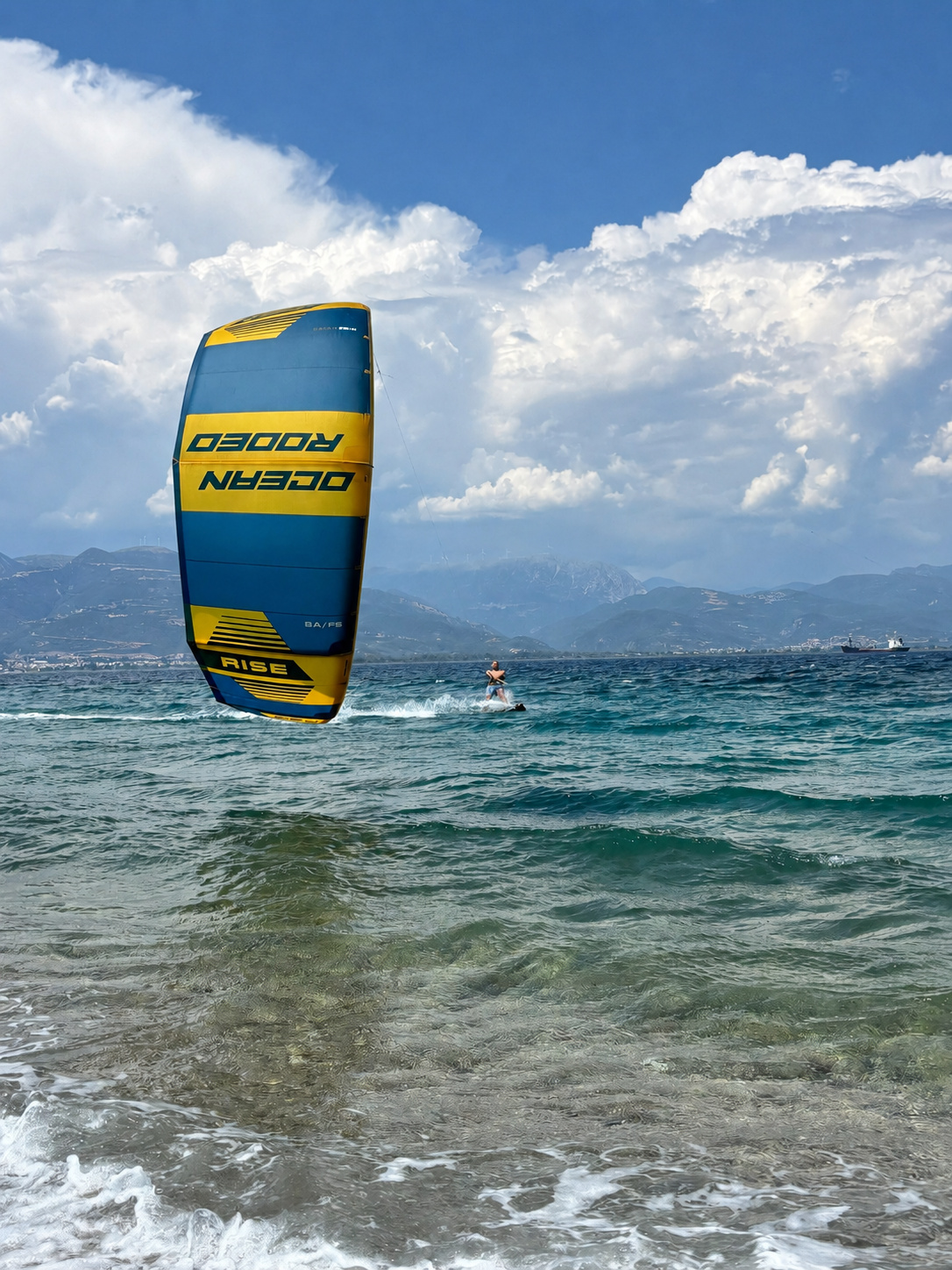
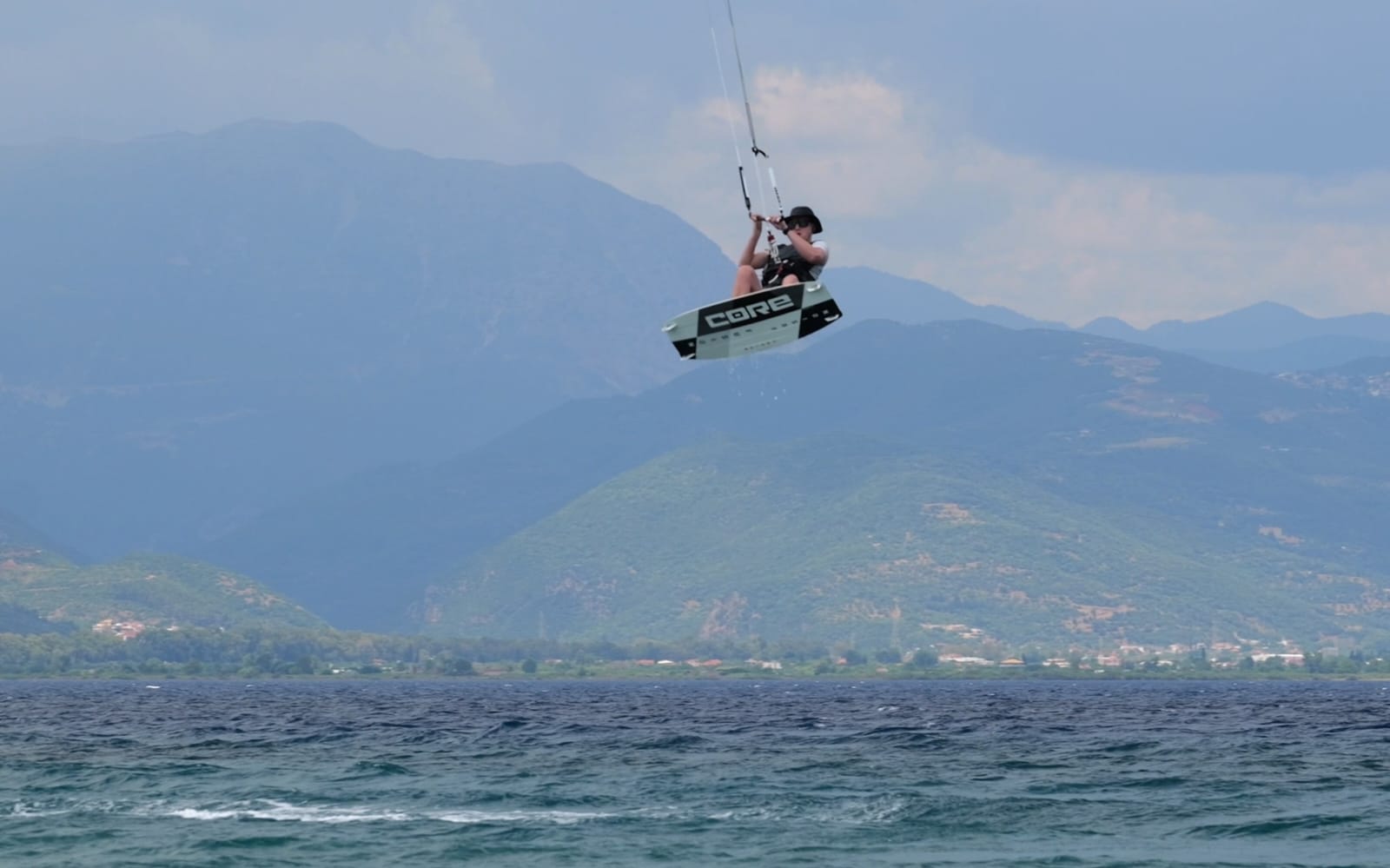
At Drepano we also met up with Pavel Flos and his son, who had set off a few days after us. So we had a session together and enjoyed some great riding. That’s another thing I love about these road trips. Everyone takes their own route, but then, a thousand kilometres later, you meet people you know from home out on the water.
Drepano relies heavily on local thermal winds. So it isn’t enough to look at the standard wind forecast. The forecast upper-level wind and local conditions are important too.
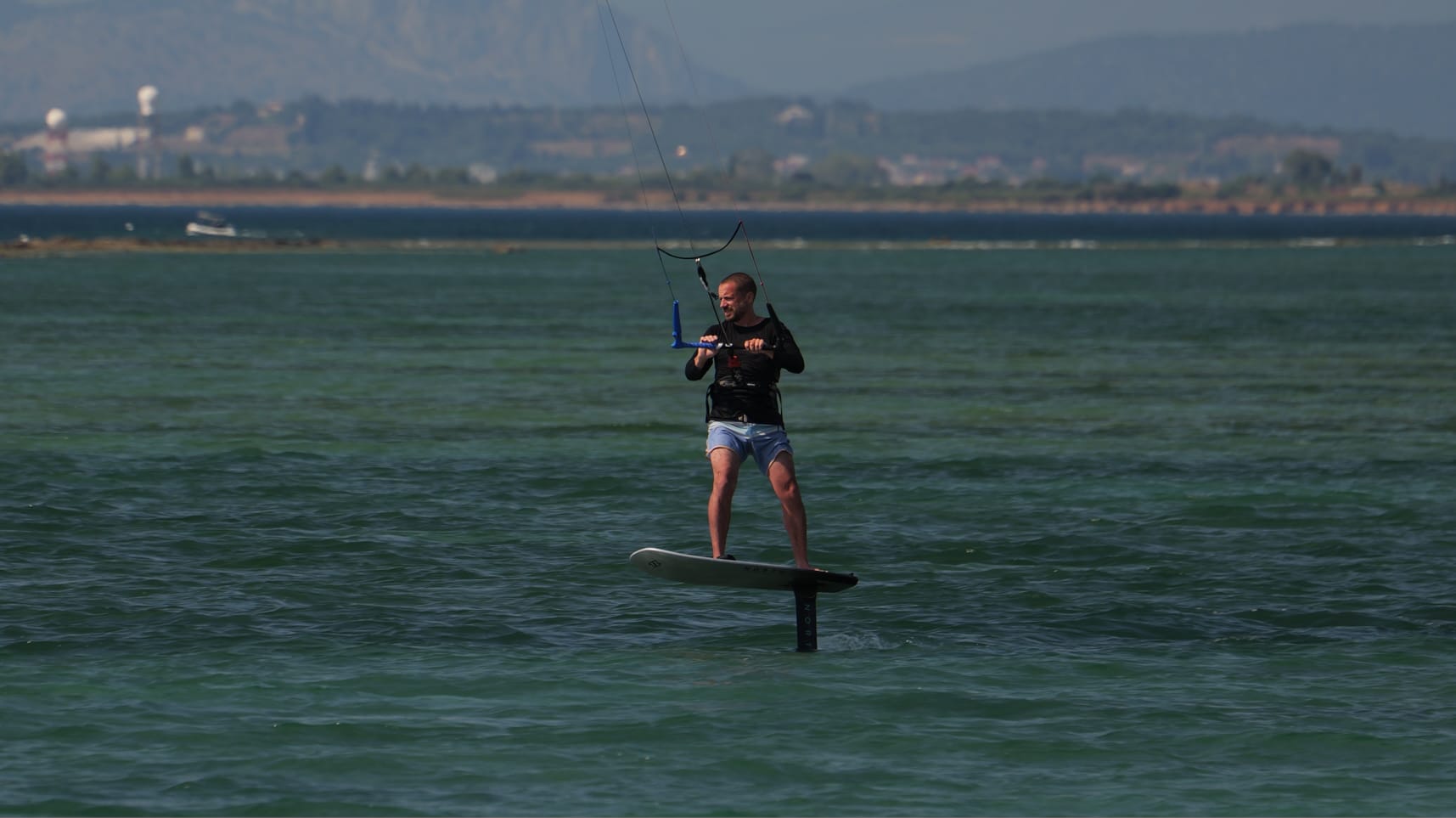
The flat water was excellent when we rode there. Great for freestyle. You can also foil here, of course.
The beach is very rough around the edges. Portable toilets, freshwater showers and the Patras bridge in the background. Right by the main road, we found a great café where coffee and baguettes cost around €2.
What I missed, though, was the kind of atmosphere that would make me want to drive 1,500 kilometres to get there. The spot is fairly small and the surroundings are quite industrial.
So the verdict?
I’m really glad I got to experience Drepano. We had a great time riding there with Pavel and his son, and it’s a genuinely interesting freestyle spot. But Drepano alone isn’t a reason for me to get in the car and drive across half of Europe. If I lived nearby, I’d go there to practise after work. For my dream week-long Greek kite holiday, I’d personally keep looking.
KITE SPOT: DREPANO
Water: flat or choppy depending on the side of the spit
Beach: pebble spit
Wind: local thermal winds are very important (forecasts are often inaccurate)
Disciplines: freestyle, freeride, foiling
Facilities: basic toilets, fresh water, refreshments nearby
Atmosphere: sporty and rough around the edges
Our verdict: excellent riding, but not a destination we’d drive 1,500 km for on its own
Mavri Miti – more space and shallower water
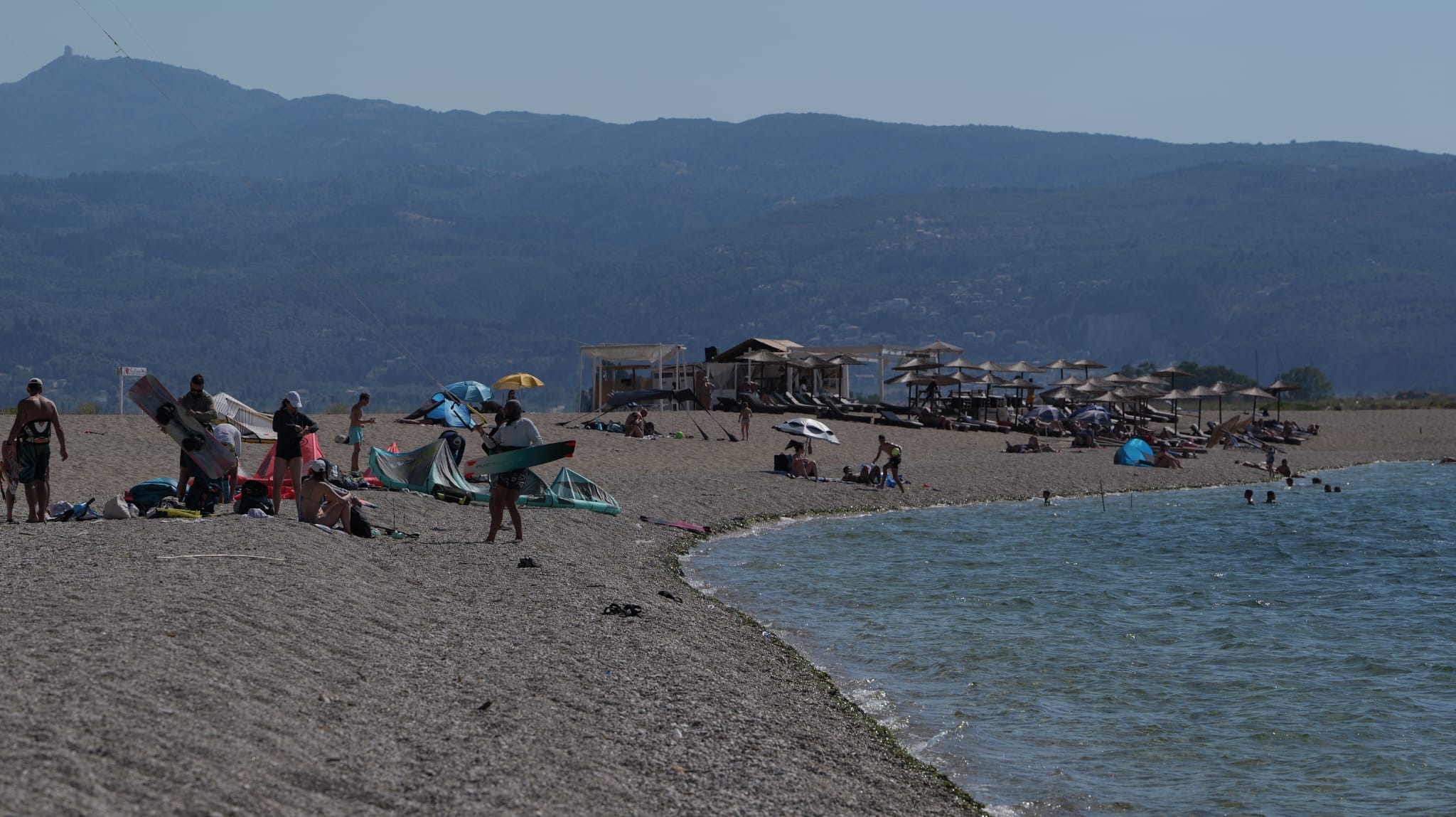
Our next spot was Mavri Miti, about an hour’s drive from Drepano. The place has a completely different character: a long pebble beach used for swimming, shallower water, a bar and a shower.
We thought the area could also be interesting for people learning to kite. It always depends on the wind direction and strength, of course, but compared with the small spot at Drepano, there’s a completely different sense of space here.
Overall, it’s more natural and open. There are cafés and refreshments on the main road a few kilometres beyond the beach, so you can comfortably spend the whole day here.
Nice, but still not the kind of place where I’d step out of the van and say: we’re staying here for a week.
KITE SPOT: MAVRI MITI
Beach: long and pebbly
Water: shallow
For beginners: promising in suitable conditions
Facilities: bar, shower, cafés nearby
Our verdict: a pleasant spot with plenty of space
Katakolo – kilometres of sand and downwind potential
Our next stop was Katakolo. And once again, it was completely different.
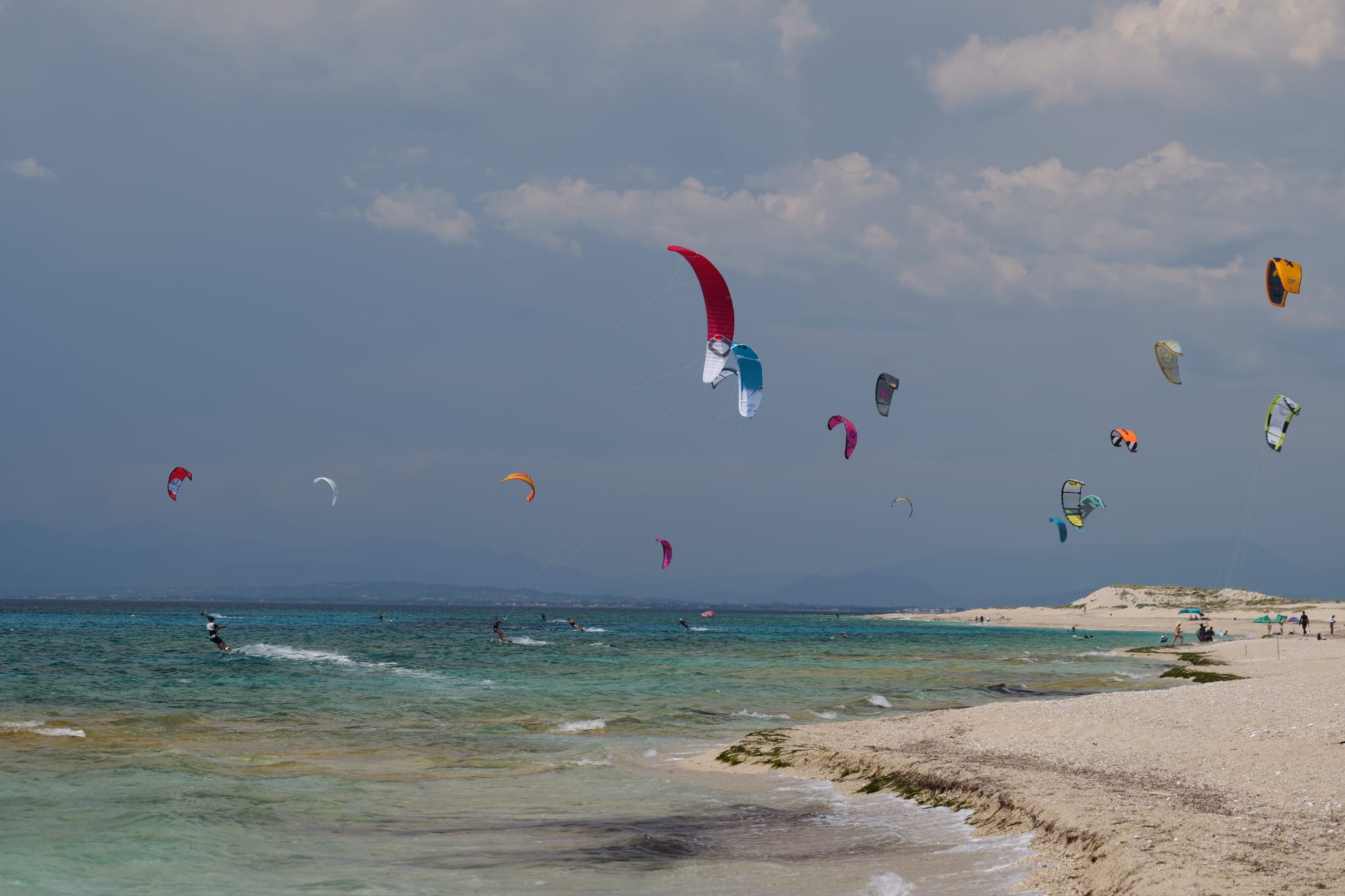
A long sandy beach stretches for kilometres along the coast. You can immediately picture a proper downwind run here.
There’s plenty of space, along with bars, swimming and all the usual beach life.
Apparently people do kite here, but during our visit there was certainly no sign of it being a major local kite destination.
During the peak summer season, I’d be very careful about swimmers and the number of people on the beach. Outside peak season, though, the sheer length of the coastline could be a major advantage. There’s definitely potential, and thermal winds should work well here.
KITE SPOT: KATAKOLO
Beach: long (20 km) and sandy
Setting: open coast
Activities: freeride, potential for long downwinders
Watch out for: swimmers and other beachgoers during the season
Our verdict: plenty of space, but it wasn’t love at first sight
The Peloponnese – would I go back?
After these stops, I had somewhat mixed feelings. I certainly wouldn’t rule out the Peloponnese. We only explored a small northern part of the peninsula. We didn’t really make it south, for example, and it’s entirely possible that the places there would completely change my assessment.
I can imagine a great road trip of several weeks around the whole Peloponnese. Kiting, swimming, travelling, seeking out small beaches and discovering things for yourself. But if someone came to me and said:
“I have a week. I want to drive 1,500 kilometres from Czechia just for kiting. Should I head to the Patras area?” Based on our experience, I’d say I know places I’d recommend first.
But then we crossed back over the water and headed north along the west coast.
And then came Tsimari.
Tsimari Flatland – Brazil in Greece
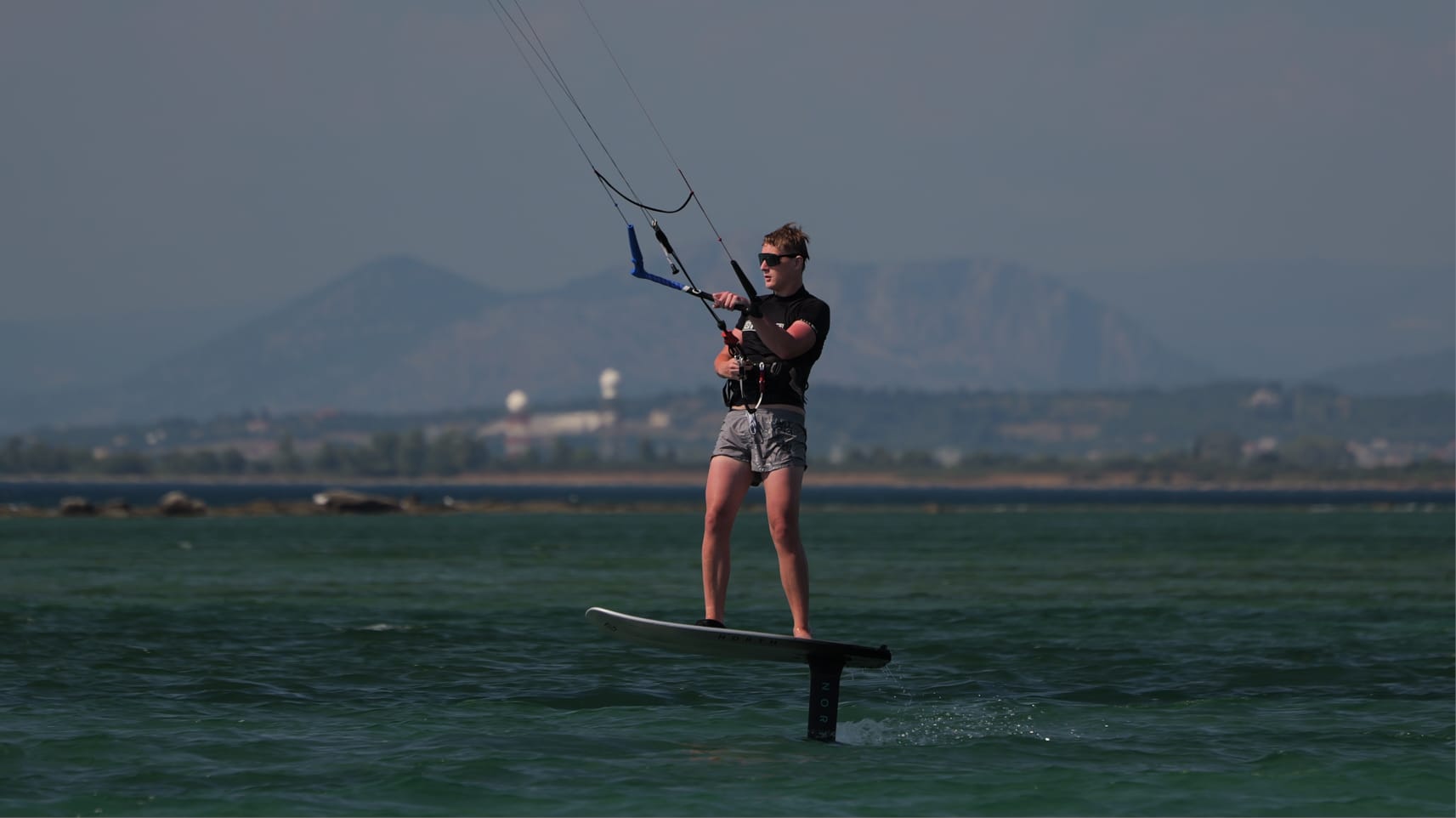
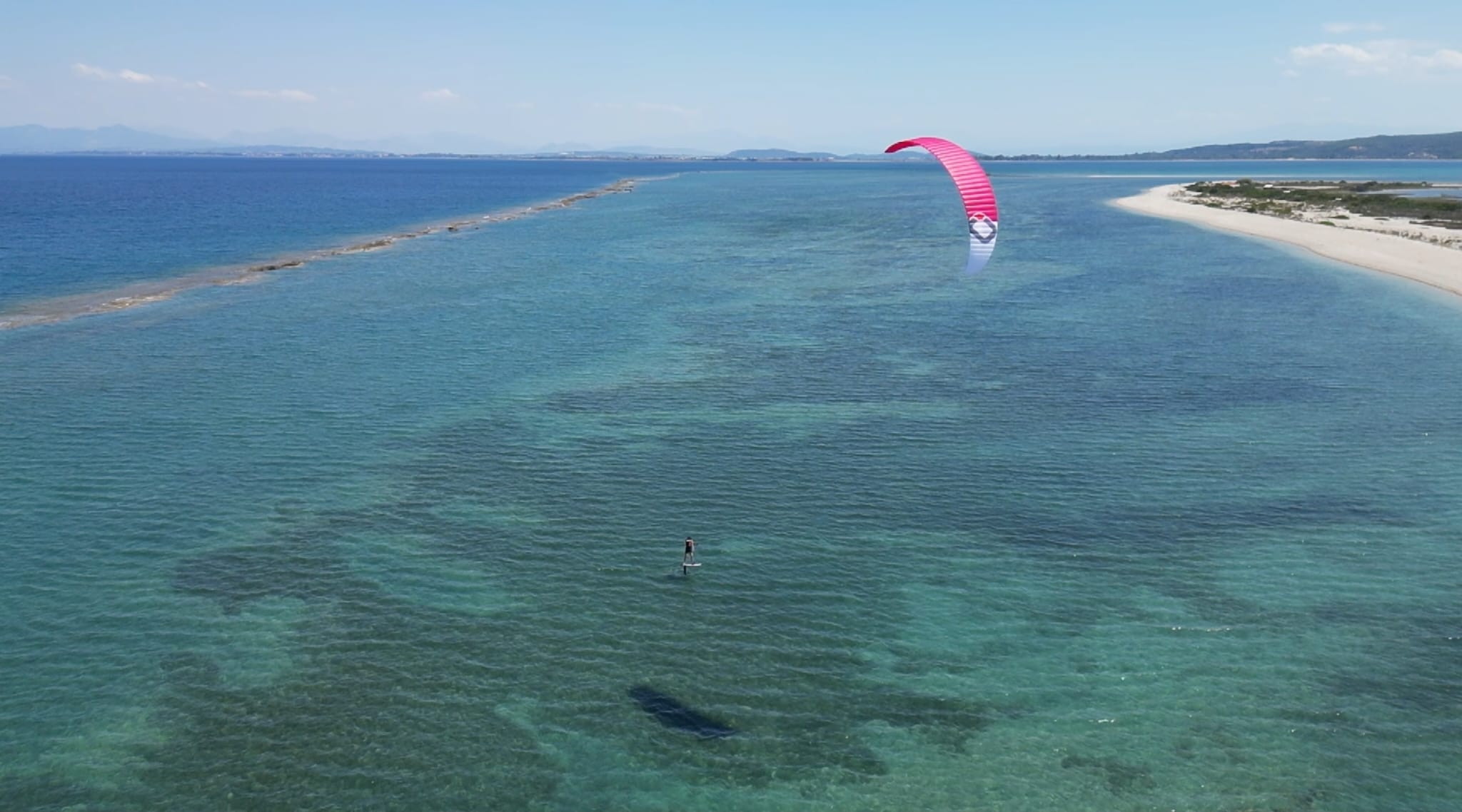
If I had to pick just one kite spot from the Greek leg of the road trip that I want to return to, it’s Tsimari Flatland. For me, it’s an absolute highlight.
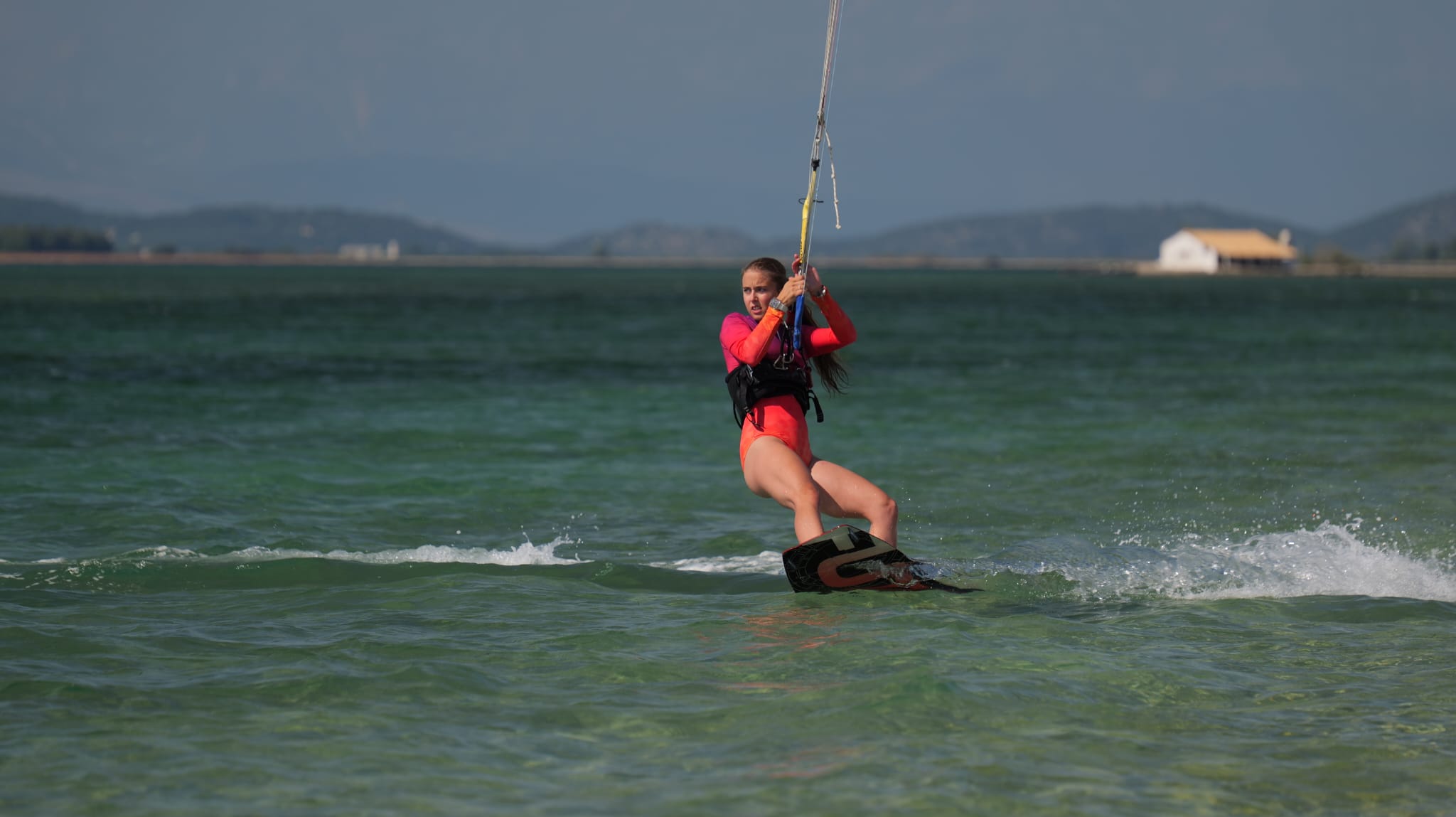
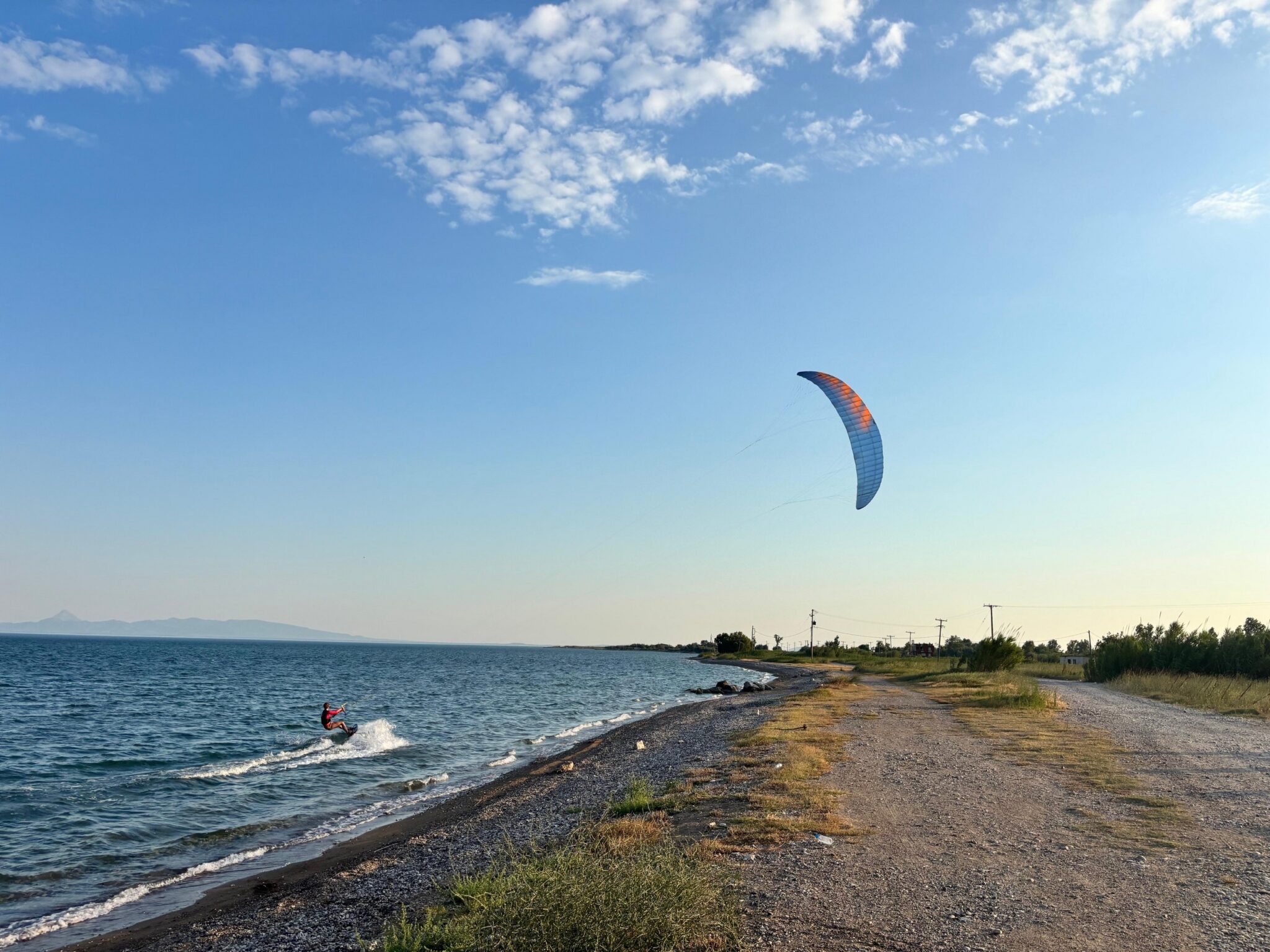
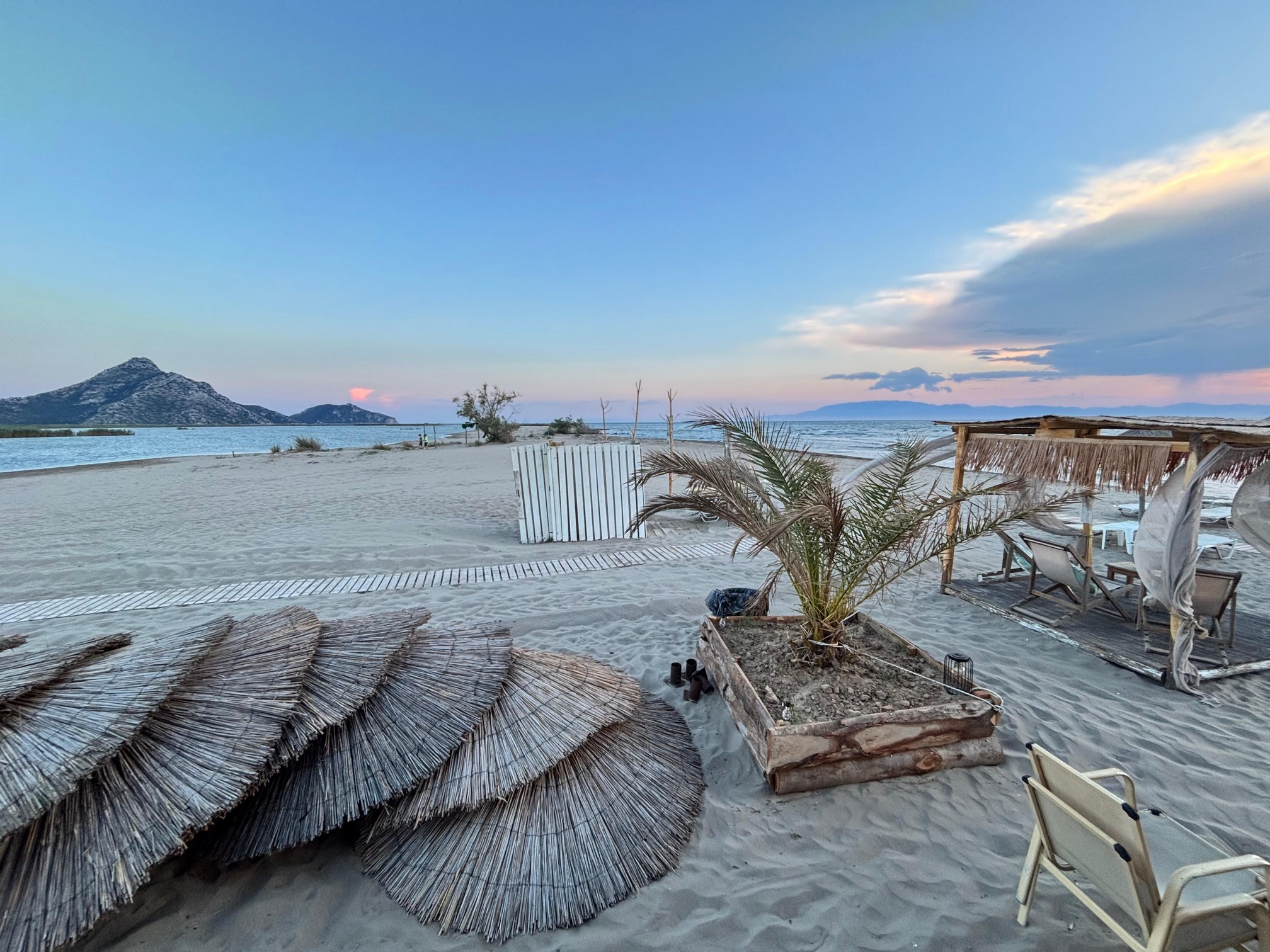
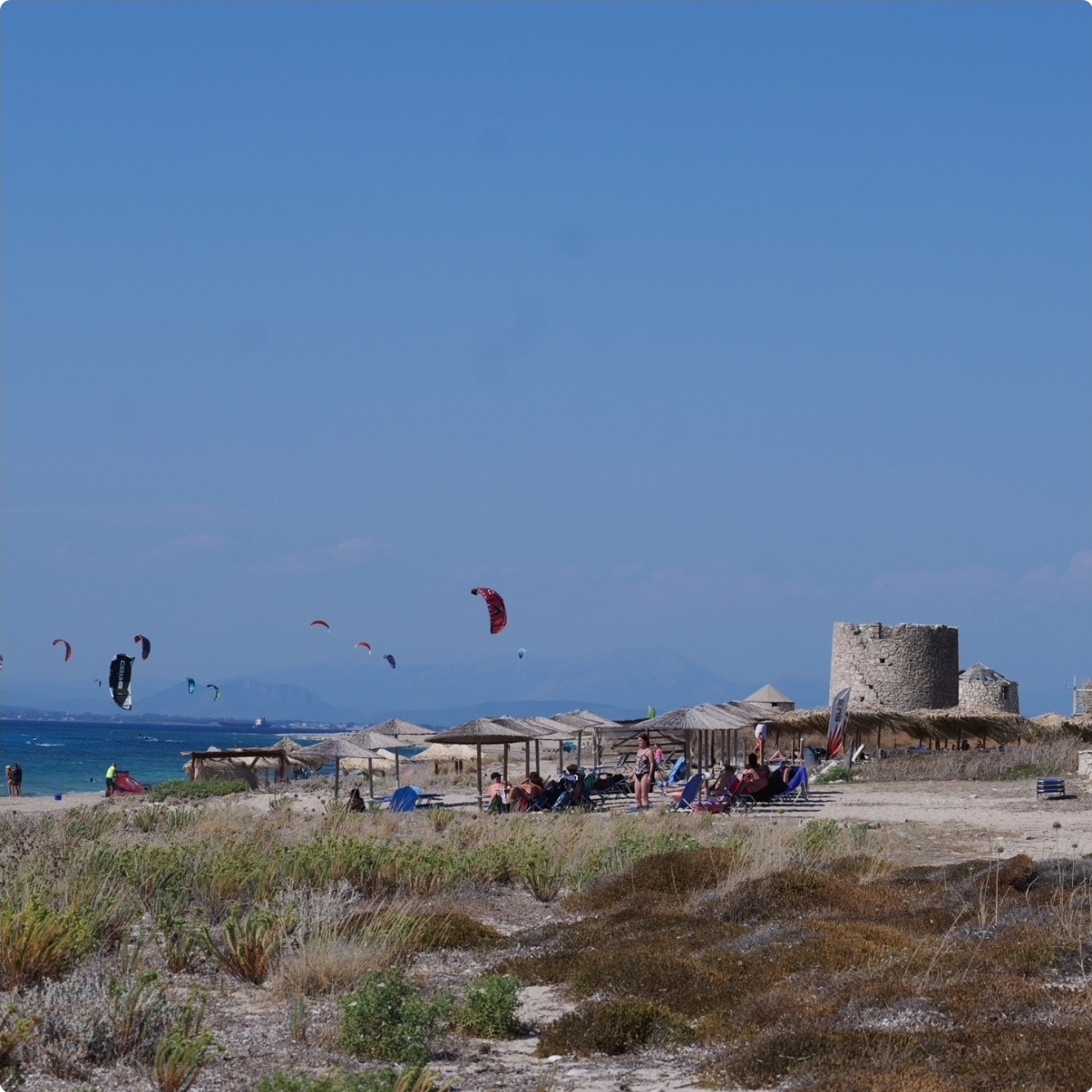
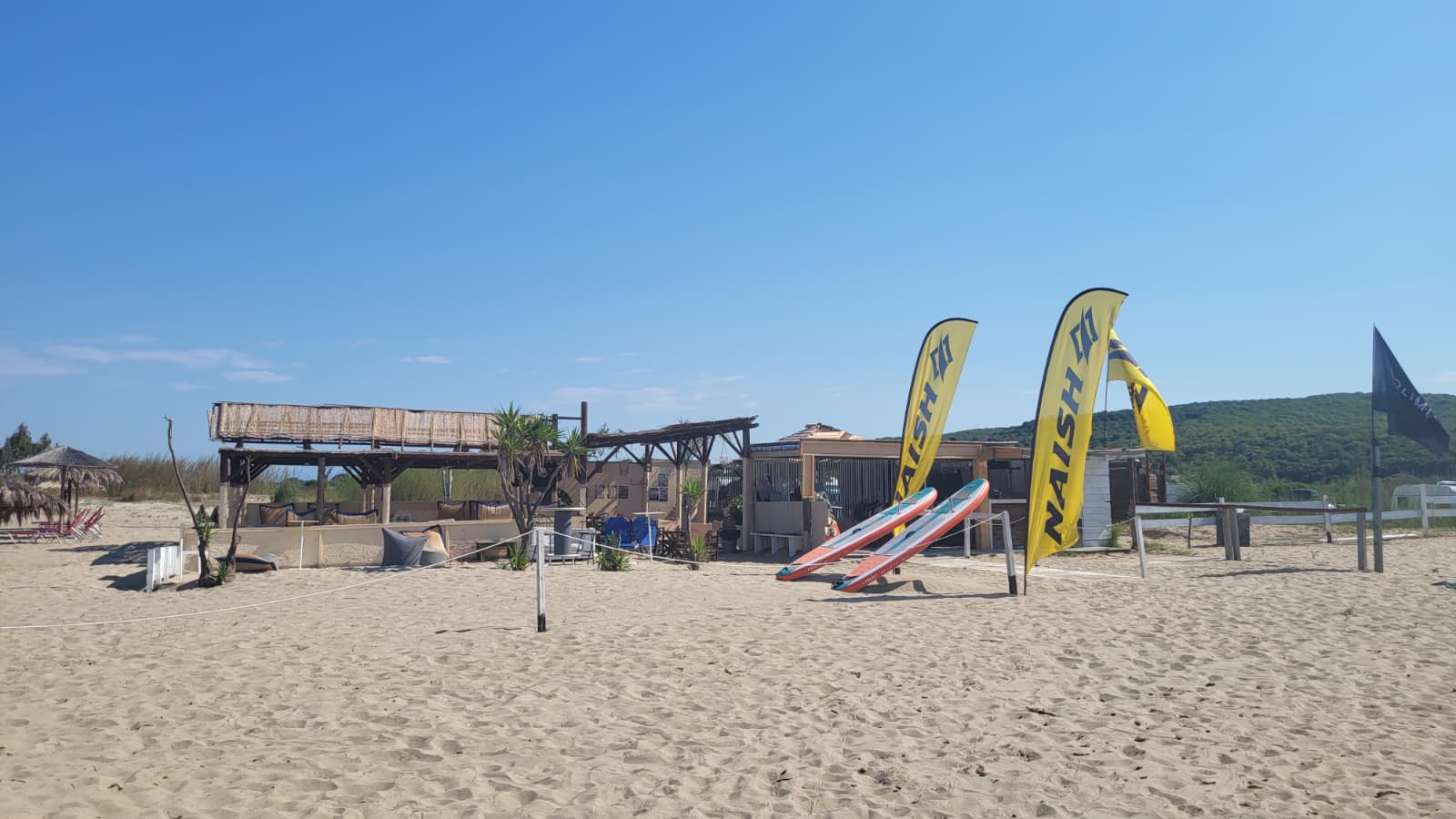
When we arrived, I almost felt as though we’d been transported to Brazil. Flat water. Shallows. Little sandy beaches and spits. Different parts of the spot where you can find flat water or chop depending on the wind and what you feel like.
And above all, the atmosphere. No big hotels. No polished resort. No industry around it. Just nature.
Simple fishermen’s cottages, metal shelters and caravans scattered around give the whole place a wonderfully authentic feel. Natural. Unspoiled.
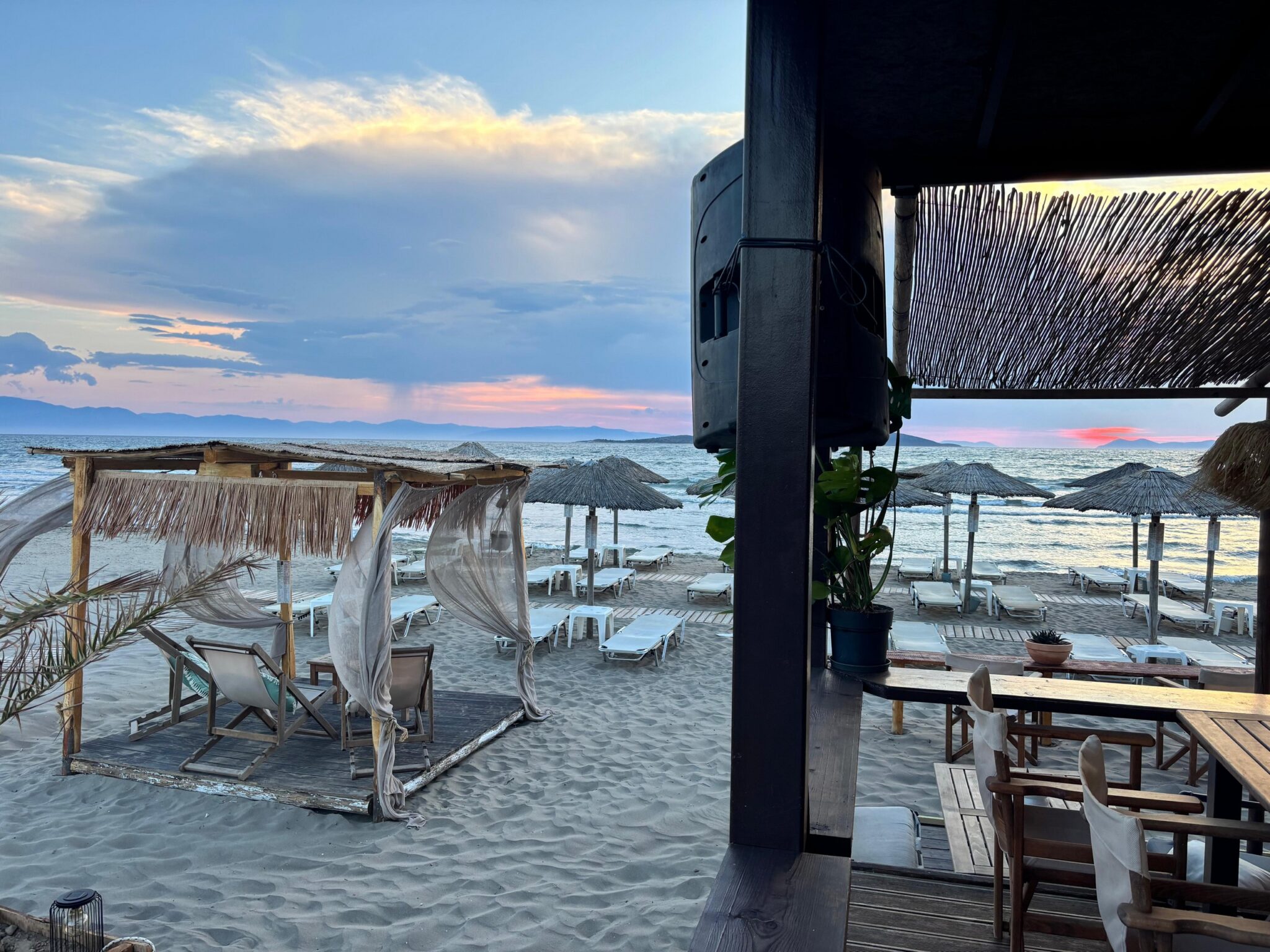
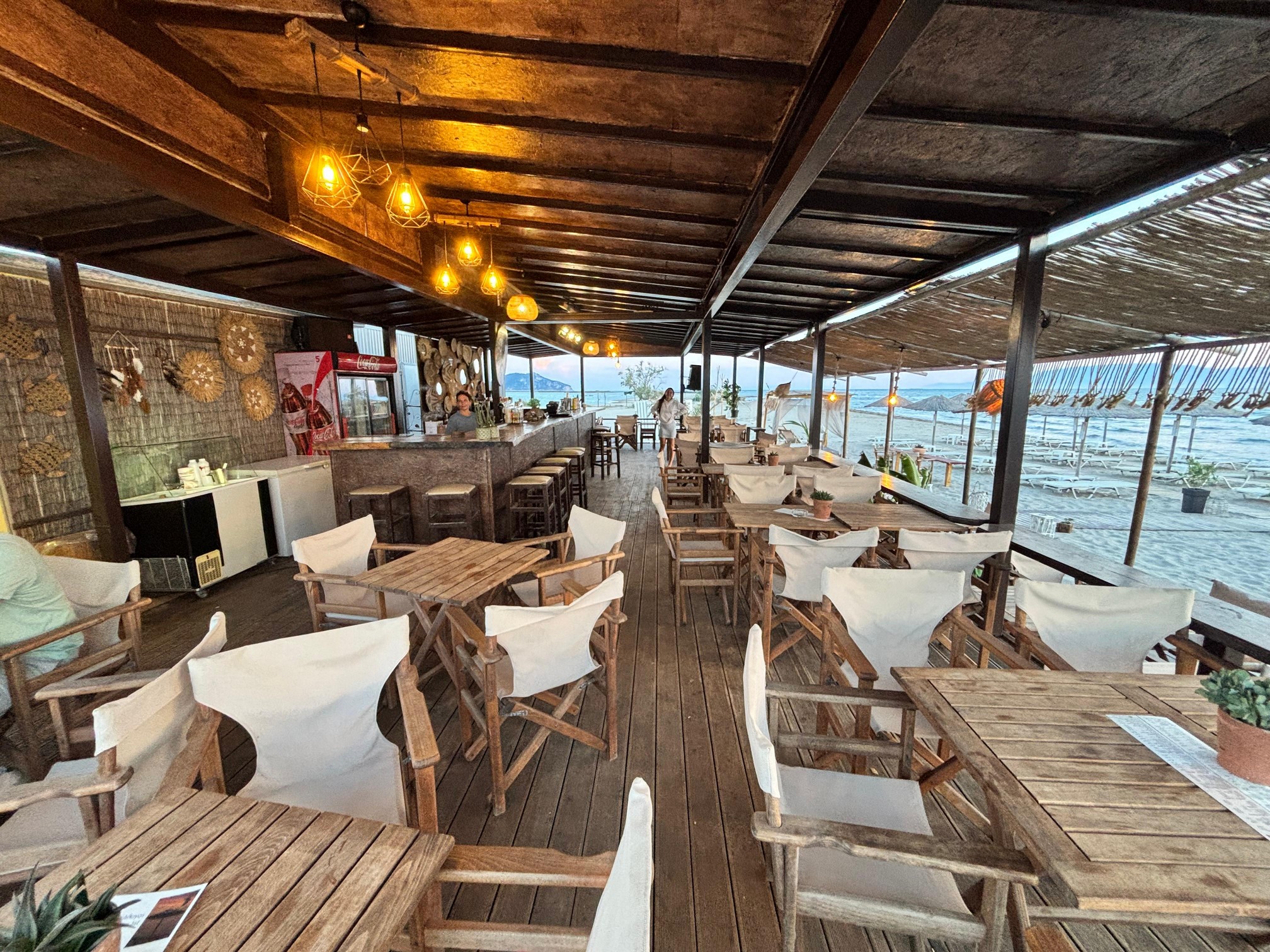
There’s a great bar at the end, and if you’re travelling in a camper or van, the place makes even more sense. This is exactly the kind of spot I love.
Because a good kite spot isn’t just a table of wind speeds, water depths and beach sizes. It’s the overall feeling.
And Tsimari has that feeling. For me, it’s one of the most beautiful kite spots I’ve ever visited.
KITE SPOT: TSIMARI FLATLAND
Water: flat water, shallows and some chop
Beach: small sandy beaches, spits and bays, with plenty of variety
Disciplines: freestyle, freeride and, depending on conditions, promising potential for teaching
Atmosphere: natural, rustic and shaped by fishing
Facilities: simple, with a pleasant bar
Vanlife: a perfect place for a van
Our verdict: ★ TOP KITE SPOT OF THE ENTIRE TRIP ★
Lefkada – exactly the Greece we were looking for
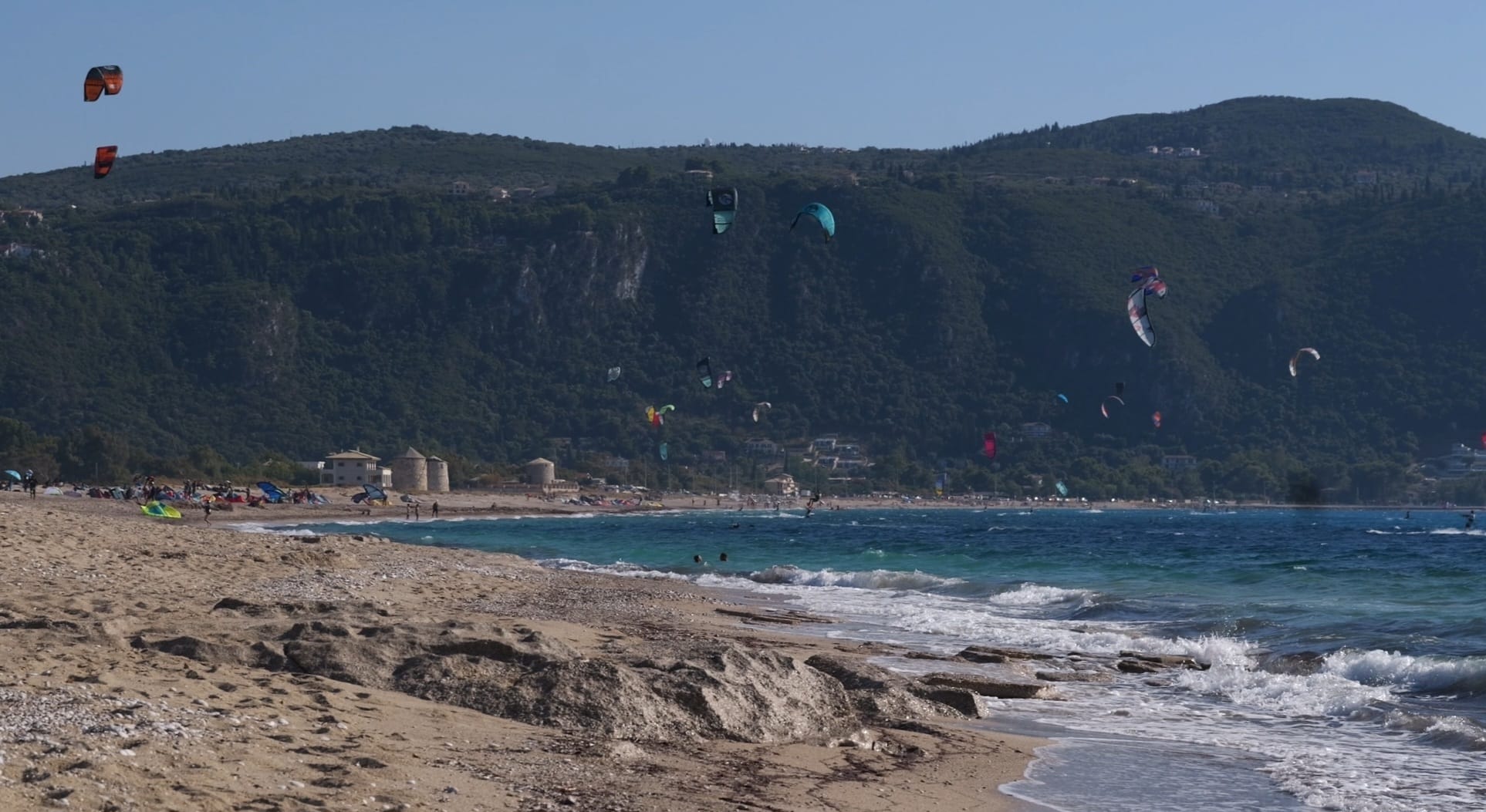
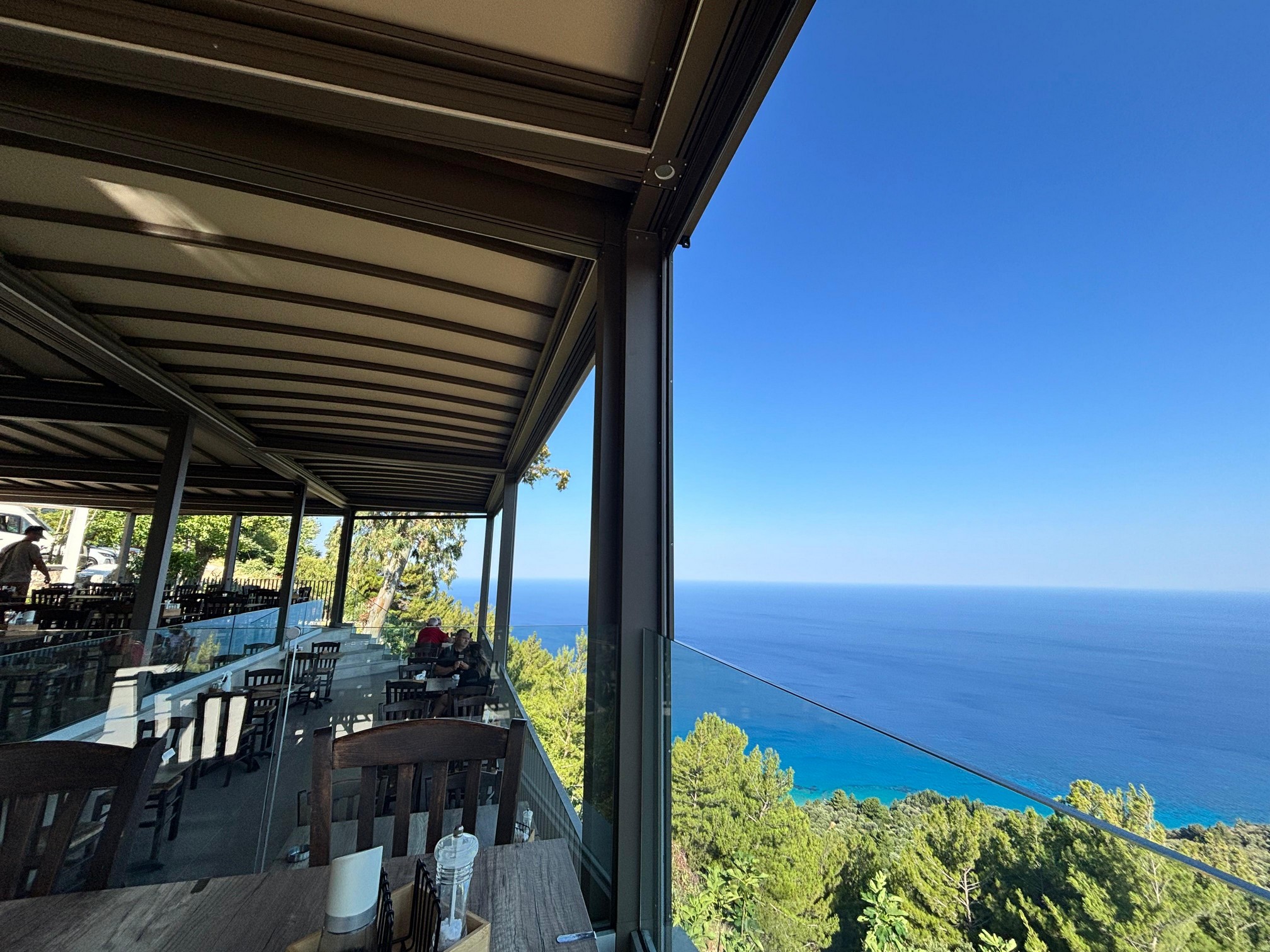
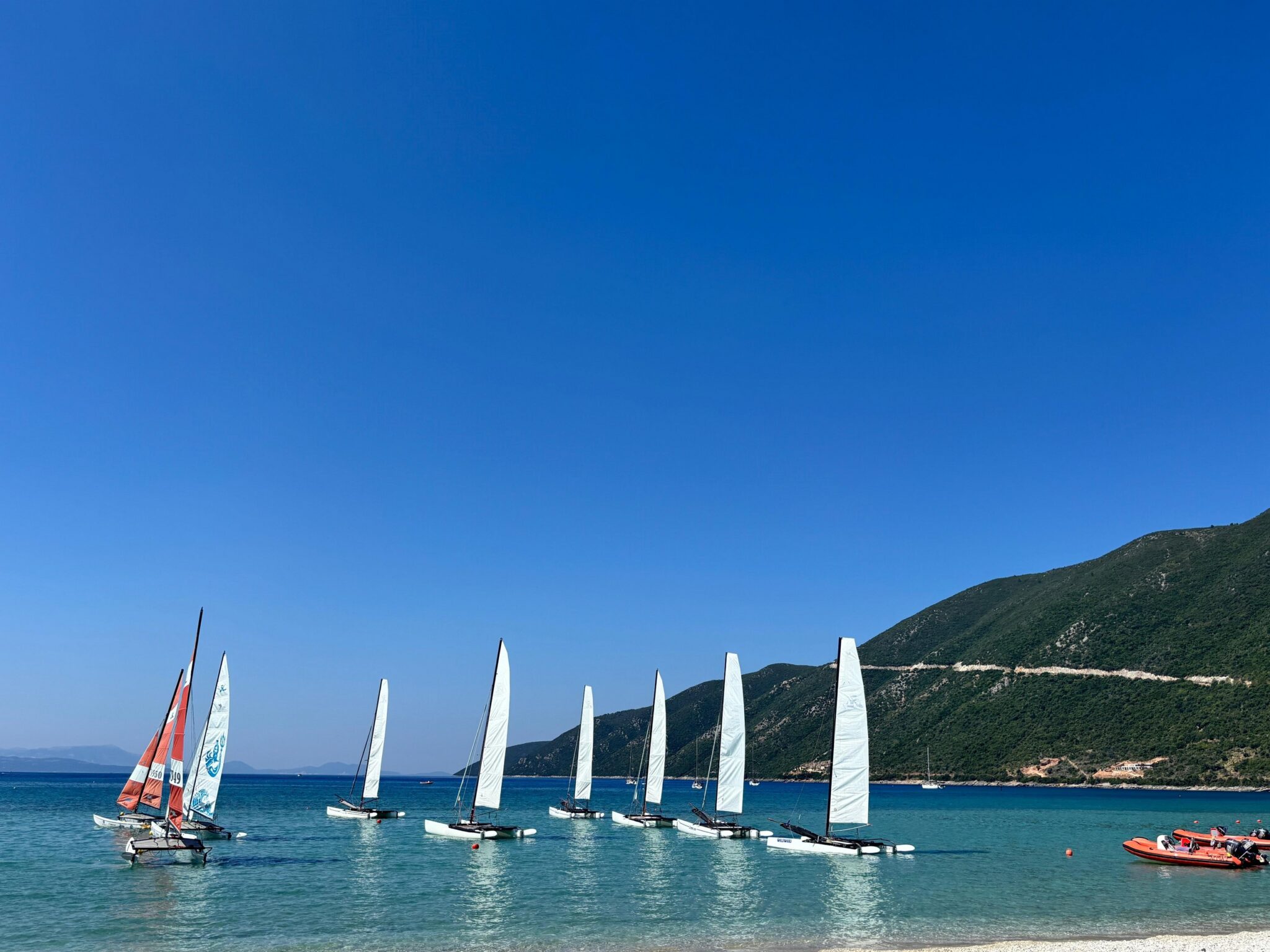
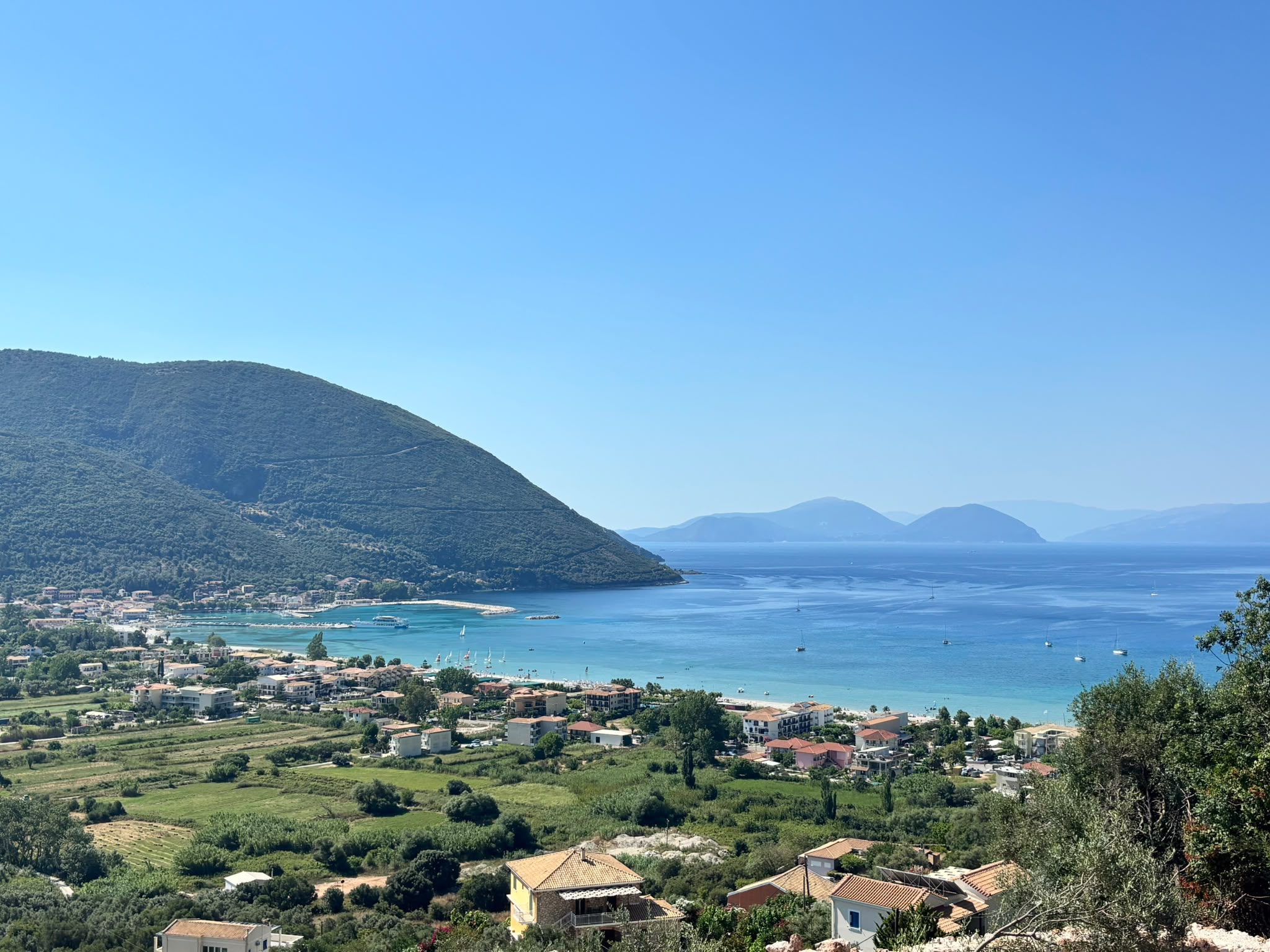
We continued north along the west coast to Lefkada. Lefkada was a very pleasant surprise. There are several different spots, each with its own character.
Agios Nikolaos caught our attention with its shallower water and conditions that could also work well for learning. The other spots are more technical.
Deeper water, rocks in places and more challenging exits from the water. But the water is beautiful, we had good wind and the island’s overall atmosphere is great.
It was here that we met Pavel Flos and his son for the second time, after riding with them at Drepano. So we had another session together, this time in completely different surroundings.
And it’s exactly these chance encounters that make a road trip a road trip. You say goodbye at one spot and, several days and hundreds of kilometres later, meet again on a beach, pump up your kites and go riding.
Lefkada felt exactly like the Greece I’d travel to see.
KITE SPOT: LEFKADA / AGIOS NIKOLAOS
Water: shallow or deeper depending on the spot
Beginners: Agios Nikolaos looked very promising
Advanced riders: several more technical spots on the island
Watch out for: rocks and more difficult exits from the water in places
Atmosphere: beautiful water, island scenery and a relaxed Greek atmosphere
Our verdict: definitely an area I’d like to explore in more detail and return to
Now we just had to catch the ferry
From Lefkada we needed to continue towards Albania. We discovered that we could either wait for the next ferry and be delayed by several days, or try to catch one leaving in about two hours.
So we decided to go for it. We drove at a brisk pace.
Still in Greece, just before the Albanian border, a black BMW pulled into my path from the right. At the last moment, I gave way, gestured an apology and waved them through.
They didn’t move. So I drove on. And the BMW followed us.
A siren, but no flashing lights.
I thought: Great. We’re close to Albania and now some criminals in a black BMW are chasing us. A very suspicious situation.
So of course I didn’t stop. After a while, the BMW overtook me sharply, its flashing light finally appeared, and the car slammed on the brakes right in front of our Crafter. I barely managed to stop in time.
Plainclothes police. You can probably guess what happened next.
Are you carrying drugs? Again. Open the back, inspect the van, explain that we really weren’t carrying hashish but were just desperately rushing to catch a ferry. Eventually we cleared everything up.
Back in the van. And off we went.
ALBANIA
We caught the ferry. But there was no room for us.
We got held up at the Greek–Albanian border for about 35 minutes, but we still didn’t give up. We reached the port roughly twenty minutes before departure.
So technically, we made it to the ferry, but it was full and there was no room for us.
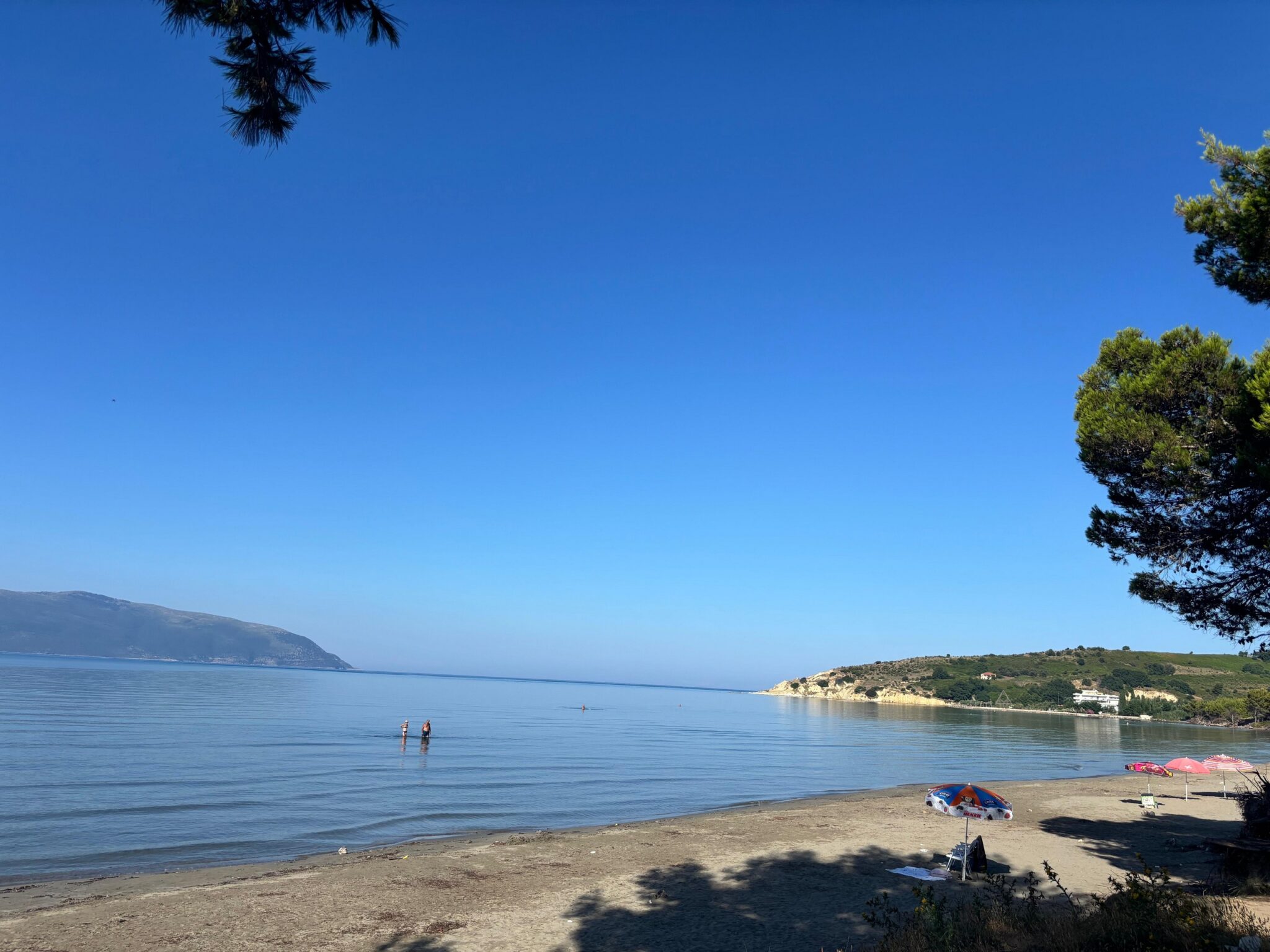
In the end, we stayed in Albania for the whole of the next day, which turned out to be no bad thing.
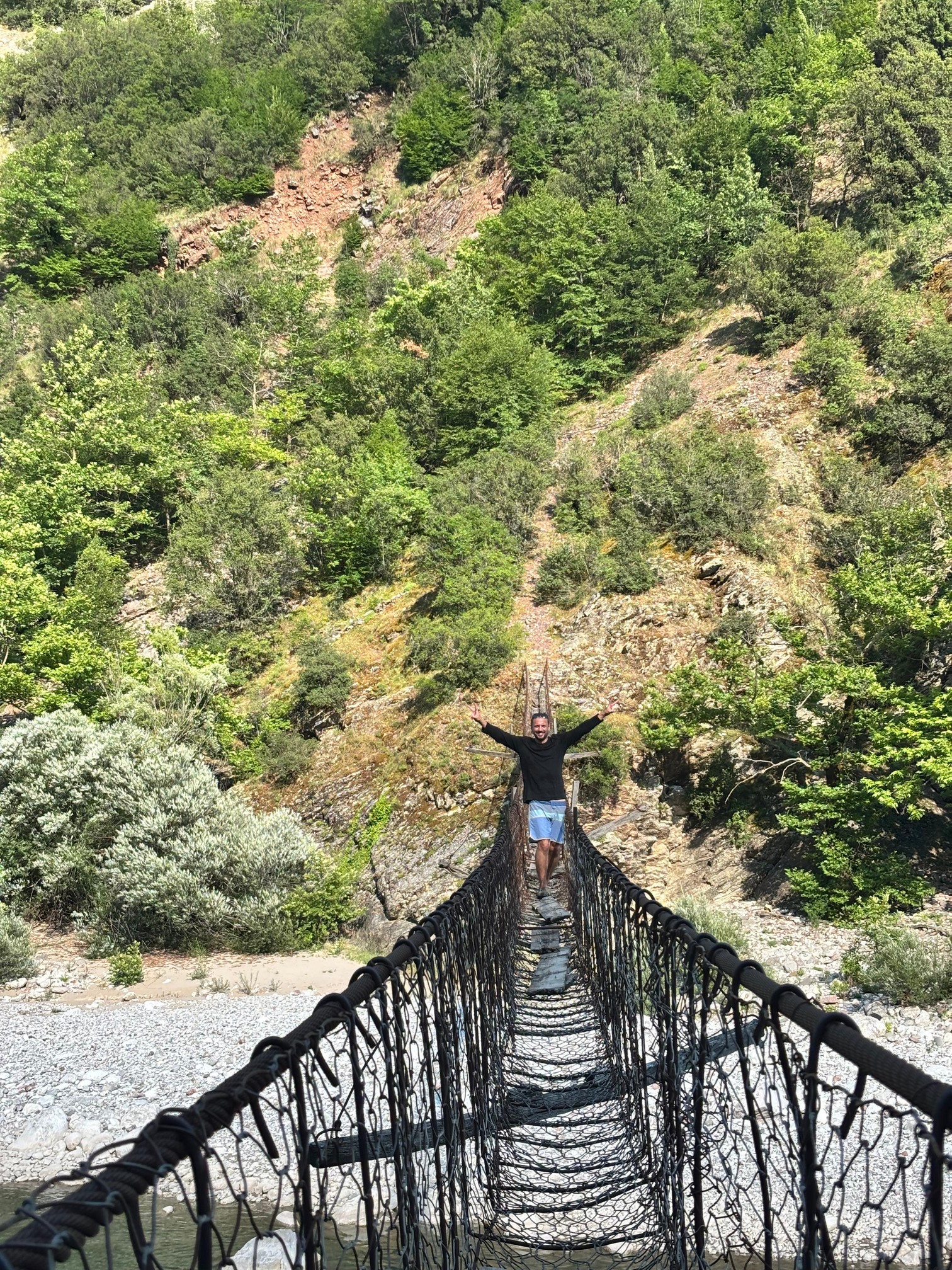
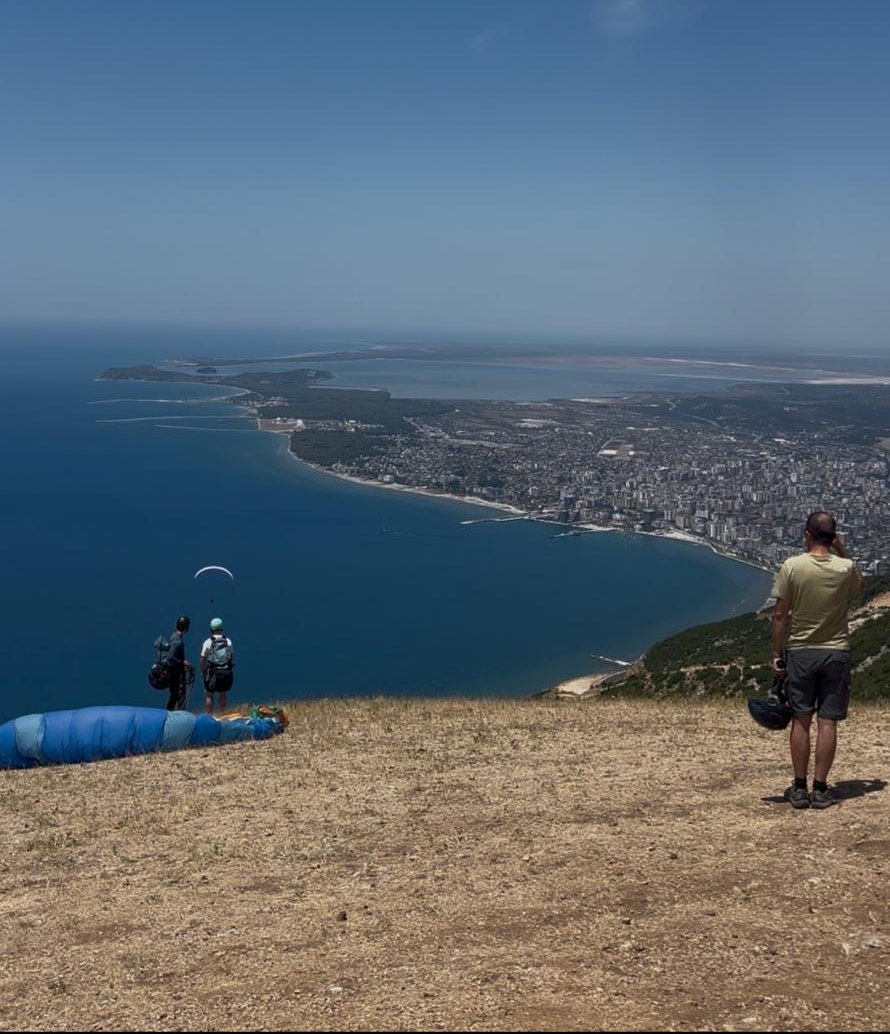
I found a nice place to go paragliding, we explored part of the country and checked out two spots recommended for kitesurfing. Once again, it showed that unplanned changes can sometimes be the best part of a trip.
We enjoyed Albania. It’s a beautiful country and still relatively affordable.
Although some of the beaches we saw along the way were another story. They reminded us of northern Italy twenty years ago, with crowds and sun loungers everywhere.
The next day we drove to another port and this time got onto the ferry to Italy. But before boarding, another episode began:
“You must be carrying something.” The Crafter was sent through a huge X-ray scanner.
We had to get out of the van, and the officers told us that anything living inside would die. They scanned the entire van with a very powerful X-ray.
Then came the dogs, searching the cab, the rear compartment and finally the luggage area. Another inspection lasting around 1.5 hours, and once again they found nothing. Just another entertaining experience and story for us.
In the end, we had quite a nice chat with the officers about their cooperation and joint exercises with the Czech police.
Then we were free to board.
ITALY
Across Italy to our base
After about six or seven hours, we arrived in Bari, bringing the Balkan leg of the journey to an end.
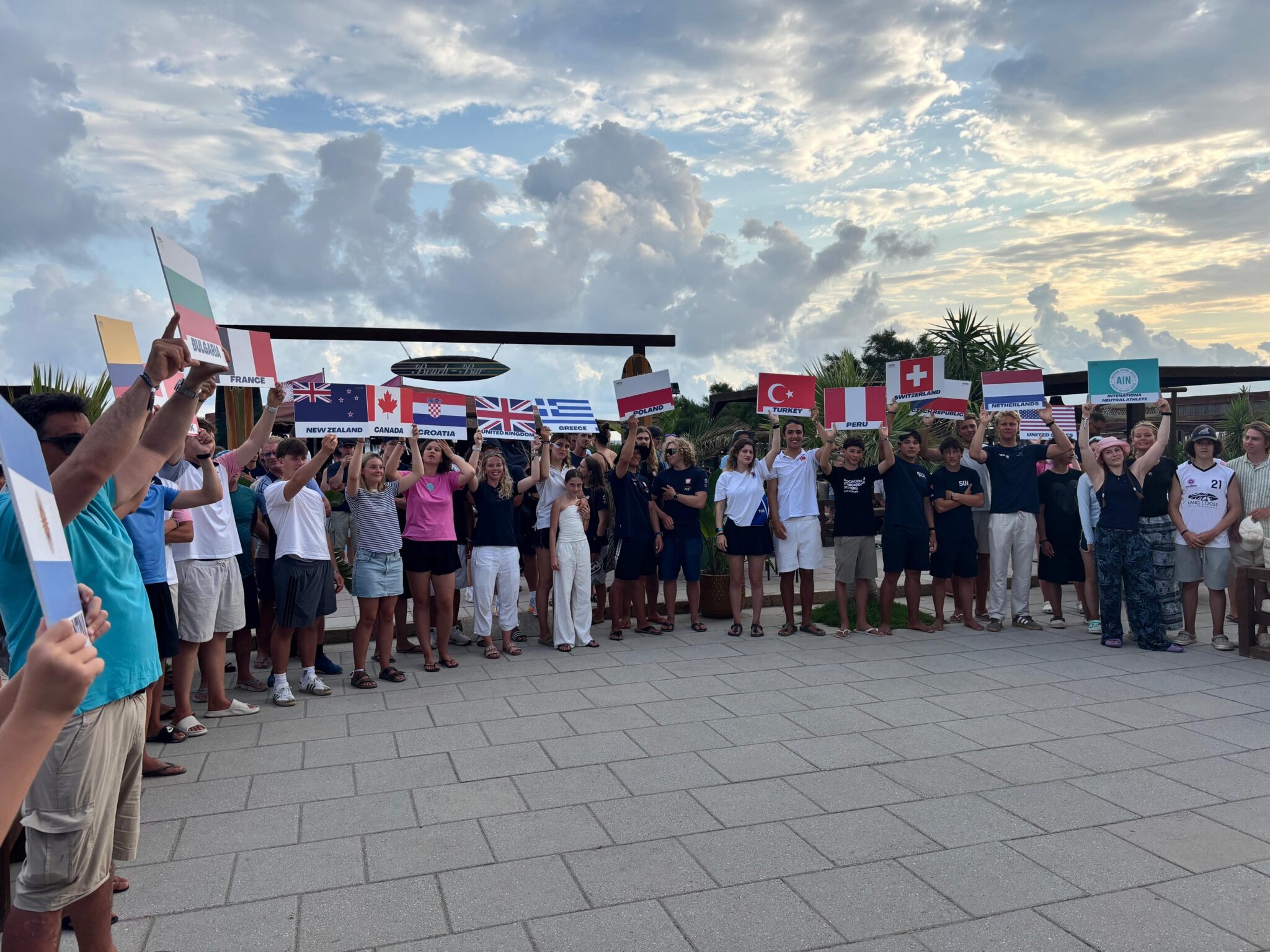
But the road trip was far from over. From Bari, we continued across southern Italy to Gizzeria, where the Formula Kite Junior World Championships were taking place.
We met the Czech group, including Petr Beneš and his son Štěpán, who was competing. We watched the races and went foiling, and I also took the opportunity to paraglide in Zambrone with Massimo Pronesti, who also offers tandem flights there.
Then we headed for the Strait of Messina, took the short ferry crossing to Sicily and continued west across the island.
We made another stop in Sicily near Cefalù, where I took another paragliding flight from a launch site about 25 kilometres from town.
And then, finally, we headed for:
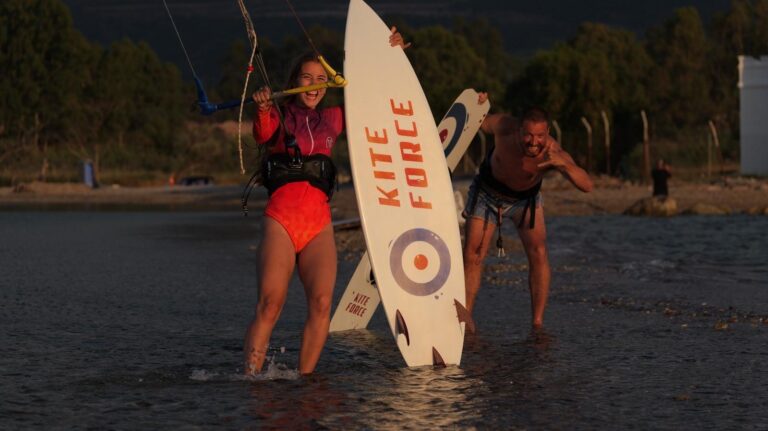
Birgi – Lo Stagnone – our KiteForce base. We were home.
After several thousand kilometres, we parked outside the house. The guys were already there, more people arrived over the following days, and our Junior Camp was due to start a few days later, turning out to be a great success.
Kitesurfing spots we visited along the way
1. Drepano – Peloponnese / Patras
A famous Greek spot on a pebble spit. Great flat water for freestyle, opportunities for foiling and a strong influence from thermal winds. Basic facilities and a rather industrial setting.
Our take: great riding for training, but not a reason on its own to drive 1,500 km.
2. Mavri Miti – Peloponnese
A long pebble beach with shallower water, a bar and a shower. Plenty of space and promising for beginners in suitable conditions.
Our take: a pleasant, versatile spot.
3. Katakolo – western Peloponnese
Kilometres of sandy beach and plenty of space. Offers freeride opportunities and potentially very long downwind runs.
Our take: interesting potential, but watch out for swimmers in peak season.
4. Kryoneri / Varasova
A nice beach below the striking Mount Varasova. We mainly used the area for paragliding, but the western part of the coast also looked promising for kiting and teaching.
Our take: a place we’d like to investigate more thoroughly.
5. Tsimari Flatland
A natural lagoon spot with sandy spits, shallows, flat water and chop. Fishermen’s cottages, caravans and a simple bar.
Our take: the clear winner of the Greek leg of the road trip. Brazil in Greece.
6. Lefkada – Agios Nikolaos and the surrounding area
Several spots with different characteristics. Agios Nikolaos has shallower water, while other spots are more technical, deeper and rocky in places.
Our take: a beautiful area that deserves a longer kite trip of its own.
Paragliding spots we flew along the way
1. Kruševo – North Macedonia
One of the best-known paragliding locations in the Balkans and a place for long XC flights.
It was especially memorable for me because it was where I took off on my longest cross-country flight to date.
After three and a half hours, I landed…
in Greece.
My take: the absolute paragliding highlight of the entire trip.
2. Mouzaki – Greece
A large mountain slope with clear views and pleasant conditions for ridge soaring and thermal flying. A big advantage for van travel is the option to sleep at the launch site.
My take: a very relaxed road trip stop.
3. Kryoneri / Varasova – Greece
Launch at approximately 400 metres above sea level. Ridge soaring along the mountain, thermals and the chance to fly out over the water.
Landing on the beach by the bar.
My take: one of the most beautiful combinations of sea and paragliding on the entire trip.
4. Albania – Shashika
An unplanned paragliding stop made possible because there was no room for us on the ferry to Italy.
And that’s exactly what’s best about road trips.
My take: proof that a disrupted plan often leads to a new experience.
5. Zambrone – Calabria, Italy
A paragliding stop while crossing southern Italy after visiting the Formula Kite races in Gizzeria.
My take: a beautiful combination of flying and the Italian coast.
6. Cefalù – Sicily
The last paragliding stop before arriving at our base in Lo Stagnone. The launch site is outside Cefalù itself and gave us the final flight of the entire road trip.
My take: the ideal finish before getting back to work at the kite base.
Our road trip route
CZECHIA → SERBIA → NORTH MACEDONIA / Kruševo → GREECE / Mouzaki → Kryoneri / Varasova → Patras → Drepano → Mavri Miti → Katakolo → Tsimari Flatland → Lefkada / Agios Nikolaos → ALBANIA → ⛴ ferry across the Adriatic → BARI / ITALY → Gizzeria → Zambrone → Villa San Giovanni → ⛴ ferry → MESSINA / SICILY → Cefalù → BIRGI / LO STAGNONE – KITEFORCE BASE
Finally, I’d like to thank Viky Matyášová, my companion throughout this journey, for more than two great weeks living together in the van. Although the road trip brought us a colourful collection of unexpected situations, complications and unusual experiences, we handled everything comfortably and without major problems. We’re taking away plenty of experience, knowledge and, above all, stories we won’t forget in a hurry. Viky, thanks for being such a great travel companion and for an amazing road trip!
Text: Martin Lafek, Photos: Viky Matyášová and Pavel Flos